
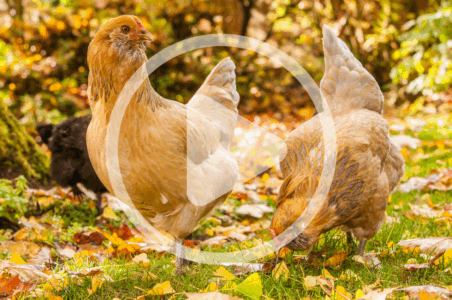
Kenny Coogan: [00:00:00] You both have such a strong community around Coffee with the Chicken Ladies, what fall inspired topics are your listeners most curious about this time of year?
Holly Callahan-Kasmala: Molting? Molting. Molting and more molting. And more molting? It’s, yeah, it’s always the, everyone’s really nervous about that.
Chrisie Dicarlo: First time chicken keepers sometimes don’t understand what it is. They don’t understand it, so they think. Oh my goodness, my chicken’s sick. They have mites or lice. So understanding the natural process of what a chicken goes through is really important because you’ll be what we say.
You won’t be scared, you’ll be prepared, and you just need to know what’s going on.
Josh Wilder: Welcome to the Mother Earth News and Friends podcast. At Mother Earth News for 50 years and counting, we’ve been dedicated to conserving the planet’s natural resources while helping you conserve your financial resources in this podcast. We host conversations with experts in the fields of [00:01:00] sustainability, homesteading, natural health, and more to share all about how you can live well wherever you are in a way that values both people and our Mother Earth.
Kenny Coogan: Good day everyone. I am Kenny Coogan, and joining me on this episode of Mother Earth News and Friends are the delightful and knowledgeable Holly Callahan-Kasmala and Chrisie Dicarlo from Coffee With the Chicken Ladies.
Coffee with the Chicken Ladies currently is in its fifth year with listeners in over a hundred countries and they spotlight different poultry breeds each week. They also cover general topics, interviews with breeders of veterinarians, authors, and companies that serve the chicken world.
As the crisp days of fall roll in it’s time to huddle up and chat about what autumn means for our backyard flocks. From molting mishaps to cozying up the coop. We’re covering everything you need to know about [00:02:00] your chickens to keep them happy this season. Grab a warm drink or cold one and settle in. This is going to be a clucking good conversation. Welcome to the podcast, Holly and Chrisie.
Holly Callahan-Kasmala: Hello. Thank you. Thank you for having us. How are you?
Kenny Coogan: I always like to schedule these interviews as early as possible.
Chrisie Dicarlo: Yes, you do.
Kenny Coogan: And it just so happens. I still have my frozen coffee.
Holly Callahan-Kasmala: We have hot coffee.
Yeah. I’m on my multiple cups already. It’s early. Thank you so much for having us. We’re delighted to be here.
Top Tasks for Fall Chicken Keeping
Kenny Coogan: We’re thrilled to have you. And we’re preparing for the fall. What are your top three tasks every chicken keeper should tackle in the early fall?
Chrisie Dicarlo: One of my top tasks to do in the fall is to double check everything that’s going on that I’m gonna need in the winter. And [00:03:00] number one are panel heaters. So I wanna make sure all my electrical things are working. They’re great, ready to go because when that cold hits, I don’t wanna be running everywhere, looking for something that’s gonna work. So I wanna make sure everything works before I get to any kind of cold weather for sure. Outlets, heaters, all those things.
Holly Callahan-Kasmala: Yeah. It’s a good time to switch out fans to heaters if you do that. Exactly. On my farm, we deep clean the coops and the reason we do this. Is because your birds end up in the coop longer in the fall and winter, and so they create tons of feather, dust and dander.
So it’s really nice to have a clean slate going into the cold months. You wanna start off at a good spot. It’s also really good to start over if you’re going to do deep litter for the winter. Mm-hmm. So that’s another reason to just strip the coop and just get it going again fresh.
Chrisie Dicarlo: [00:04:00] The third thing is I’d like to make sure I have all my supplements and everything ready to go as well, that I’m gonna need in the winter. All my vitamins and minerals and my electrolytes that I’m gonna need when it gets cold. I’m preparing for extreme weather cold, just making sure everything’s good to go.
Changing Chicken Feed Routaines in the Fall
Kenny Coogan: All right, very good. How do you, or do you adjust your feeding routines? As the winter cools down, and when I ask that question, I’m really thinking about molting season.
Holly Callahan-Kasmala: Molting, right?
So we keep our girls on really good commercial feed, which means in the fall, they can stay on their feed. We add a few things in. We’ll start giving them scratch in the evenings. . Christie can talk a little more about the diet because she has a bigger shift than I do.
Chrisie Dicarlo: I actually do use a food that is made for molting. It’s called Feather Fixer by Nutrena Feeds. [00:05:00] And it’s actually, made to help get them through the molting era. It’s a food that gives them extra vitamins, minerals, and proteins through those times.
Holly Callahan-Kasmala: I think the only other thing that I do that’s a little different and both of us do this, we make sure there’s a little bit of fat in the chicken’s diet, and that might be from occasional suet balls.
And the reason for this is that chickens need vitamin A for healthy feather formation. And vitamin A is a fat soluble vitamin, so it doesn’t have to be a ton, but a little fat available in their diet’s. Pretty important.
Chrisie Dicarlo: Also an uptake of protein is really important and calcium, because keep in mind, while you’re not making eggs and you’re making feathers, they both take that same calcium component, vitamin D and calcium and phosphorus all together to make really beautiful, healthy, shiny feathers that are full and they’re gonna keep ’em warm in the winter.
That’s the [00:06:00] number one thing. We want those feathers to help protect them.
What to Feed Molting Chickens
Kenny Coogan: So molting season can be stressful for both hens and humans. Do you do anything other than adjust the feed?
Holly Callahan-Kasmala: Yes, we make sure we’re not doing, obviously there are some routine tasks that have to be done, and if someone needs veterinary care.
It has to be dumb, but we try not to handle our birds very much because molting is so painful. We try to just keep stress in general to a minimum and keep the nutrition up so they have a pretty seamless ride. We don’t wanna do anything to upset them to, cause more pain. Really just keep everything on an even keel.
Chrisie Dicarlo: The other thing that you wanna do is while you’re not touching them, you want to look at them and watch their behavior every single day. You wanna make sure that even though molting is a hundred percent a natural process, that they are [00:07:00] handling it well. Because sometimes molting can cause a chicken not to feel well, not to want to eat well, and that starts a downward spiral.
So by checking them out a little bit more and making sure those. Behaviors are the same and they’re eating and drinking. If not, that’s the time to intervene. That’s the time to give some supplement food, to change things around. Take them out, give them some separate time to eat so that they’re not being bullied at the bowl.
It really is a, it’s a time when you need to just be watching and observing and making sure they’re doing the things, same things every day.
Kenny Coogan: Isn’t it crazy that they lose all their feathers in the fall when it starts getting cool to cold?
Holly Callahan-Kasmala: It would make more sense, like naturally if they molted, late summer when it was still warm.
But I guess this is nature’s way of making sure, like they don’t put on their fur coat until the la I should say, their feathery coat until the [00:08:00] last minute before the cold gets here.
Chrisie Dicarlo: We were just talking about this the other day. Because we were saying, yeah, we said the same thing.
Wouldn’t it be great if they molted in the summer because. But then here’s nature protecting their skin. Because a lot of times you’re not gonna go out and put sunblock on your chicken. You can, if you have a really natural one to help protect that really fragile skin under those feathers. But yeah, they try to take it and put it in the best time possible.
Sometimes you have that stray chicken that’s, and I’ve had it before that Molts in December, and you’re like. Couldn’t you do this in September? Please. Next time don’t do it in December. And those are the times when you definitely have to intervene. If it’s a catastrophic molt, you, it could be a, what we call soft molt and it’s only some feathers.
If it’s a catastrophic, you really gotta watch at that point.
Holly Callahan-Kasmala: Also, it’s naturally the time that they’re, they’re slowing down egg production so they can put those resources back into feather growing. Oh, exactly. [00:09:00]
Kenny Coogan: About 10 years to the day I went to Thailand and I saw wild red jungle fowl Nice in the forest.
So they don’t really have to care about the cool weather there.
Holly Callahan-Kasmala: No, not at all. Amazing little birds. That must have been super cool.
Kenny Coogan: Can you remind our listeners where you are located? We are both in Maryland. In Maryland? Yeah.
Chrisie Dicarlo: Mid-Atlantic of the United States.
Kenny Coogan: I’m your neighbor in North Carolina.
Holly Callahan-Kasmala: Hi neighbor.
Chrisie Dicarlo: Hi.
Chicken Care Routines Based on Climate
Kenny Coogan: Do you adjust your chicken care routines based on your climate? And
Chrisie Dicarlo: One 100%. Absolutely. Yeah. Yeah. When we talk every week during our breed spotlight, this is one of the things that we do bring up, because chickens, a lot of times they’re named for their geographical area they’re from, and when they’re in a certain area, those chickens want to, they adapt to those areas long [00:10:00] ago in the weather patterns.
So sometimes you do wanna look where are they from? A warm and humid spot. Were they from a colder spot because they will. Already be predisposed to be better in those areas. So if you’re in Florida, your chicken keeping’s gonna be different than you’re in Montana. Those two areas, you’re gonna have to do different things to keep your flock very happy.
Yeah.
Holly Callahan-Kasmala: We deal with high moisture and humidity here. So our summer routine probably looks a little extreme to people because we are fans everywhere to keep that humid air moving. Cochins aren’t made to be in hot and humid weather. So we do what we have to do to keep them safe and comfortable.
Fall Chicken Coop Care
Kenny Coogan: So let’s talk about coop care. What should we be doing now to prepare for the real cold winters. Keeping in mind, I’m from Buffalo, New York.
Wow.
And before social media my father was snowplowing the [00:11:00] path in the snow.
Oh yeah.
For all the chickens and ducks to march by the two foot long path with snow banks on the up on either side.
Chrisie Dicarlo: Yeah, exactly. So Coop prep is really important. That should really be in my number, in our number three for getting out there. You wanna make sure that you don’t have drafts, that everything is sealed up to the point where you have ventilation but not a draft. Because there’s a difference between the two, and you wanna make sure that your electricity’s gonna go, or if not, you have another plan, another place to bring them and that everything. I’d say number one is drafts to me, number one,
Holly Callahan-Kasmala: And I’ll follow that with leaks. You do not want leaks, you don’t want, you don’t want moisture getting in there and causing problems.
Here on my farm. We do perimeter checks, and that means we’re checking the perimeters on the sheep fields. We’re checking the perimeters on all the chicken runs, the geese, the ducks, to make sure there are no [00:12:00] gaps where predators can get in. Exactly, because naturally in cold weather, you’re not spending as much time outside.
You don’t have your eyes on everything as much. So really making sure there are no gaps in your fencing and your runs. The other thing we do here, because we use. Very heavy deer netting for the tops of our poultry yards. So we go around and clear all the debris off the top. Oh. Oh yeah. We call and sticks things because when you start getting ice and snow, that weighs things down and it does very bad things to your.
Your enclosure walls, and I say that from bitter experience.
Chrisie Dicarlo: Yeah I like what you said, Holly Ann, about walking the perimeter and checking to make sure that during the summer someone hasn’t dug a hole that’s not supposed to be there, making sure everything is set. It’s like when you change your clocks, you check your smoke alarms.
Then you wanna add in, also check your perimeter. Are you I check my smoke alarms. Do you? No, that’s what the husband does. He does that. Yeah. But [00:13:00] definitely check all those things because in the winter, you’re, let’s face it, you’re not gonna be out there as much as you are when the weather is nice.
So you wanna make sure there’s secure.
Chicken Enrichment in the Falllz
Kenny Coogan: Are there any fall specific enrichment activities or treats you like to offer your chickens? All I can think of is pumpkins
Chrisie Dicarlo: And peas. Pumpkins and peas. ‘Cause the peas are high in protein. So back to molting. Yeah,
Holly Callahan-Kasmala: I think one of this is just an easy thing and I feel like if you know you have a bird who will eat a bunch of stuff and get our crop stuff, you might wanna avoid this.
Otherwise, we clean all those leaves off the tops of the coops and throw ’em in the yard. They love to dig through them. Sometimes there’s some bugs in there. They just love the scratching. So low cost easy, makes ’em happy
Chrisie Dicarlo: And know your flock. Holly said, if you have a garbage eater, that’s what I call one of my chickens in my run. If they’re going to eat that stuff, try to stay away from it, [00:14:00] but it’s, they love it. They make, they do love it. They get in and they love to scratch those types of things. And giving the, switching over the treats and giving them a different variety in the different seasons. We talk about this all the time, different season, different treat for a different benefit.
So this is one of the things that you’re gonna change over.
Supplemental Lighting for Chickens in the Winter
Kenny Coogan: So with shortened daylight, that’s gonna affect their laying. They might probably all the way stop because of the molting. One way to keep them laying or increase the laying is doing supplemental lighting. What’s your take on that? Should we be giving our chickens a rest or should we be pushing ’em through?
Holly Callahan-Kasmala: If you’ve listened to us at all, you’ll know that we’re gonna say we do not use supplemental lighting. We try to keep things as natural as possible. We do spoil our birds, decreased daylight means that the pituitary gland is no longer getting the hormone stimulate laying, which means your chicken stops ovulating.[00:15:00]
And hens are female bodies doing what female bodies do. And so we, yeah, we really don’t like forcing them to ovulate when it’s their time off. They deserve that rest, right?
Chrisie Dicarlo: Yeah. We like to think they’re like, I’m on vacation. Save your eggs and do different things throughout the year to prepare for this time because they deserve that break.
They deserve a vacation. If you want your hands to lay longer in life, let’s look at this. Hands are given just like women of human, the number of eggs are gonna lay within their lifetime. So if you supplement that, that light. In the winter, you’re gonna be pushing through quicker. Your, hens gonna lay less.
It’s gonna lay, for less time. So if you give her the break, you’re gonna have a more consistent flow of eggs through the proper times of the year. I always say they’re out there with their picket signs saying, no eggs, winter eggs. We wanna rest.
Holly Callahan-Kasmala: How wanna rest? We to push out a leg, an egg, three or four times a week.
We need a rest. Yes. Yeah.
Kenny Coogan: We are gonna take [00:16:00] a quick break in our show to hear a word from our sponsor, and when we return, we’re gonna be continuing to talk about your flocks health.
Kenny Coogan: We are back with Holly Callahan-Kassala and Chrisie DiCarlo from Coffee with the Chicken Ladies and I only have a quarter of my cup left.
Oh.
Chrisie Dicarlo: Oh. You might need to refill. You take a second to go in and get another cup of coffee because we’re on our fifth. We ran and got like four more cups during the coffee break.
Kenny Coogan: No, if I have more. If I have more than two cups of coffee, my heart will beat so fast, it will come outta my chest.
Holly Callahan-Kasmala: I think we’ve been drinking so much coffee for so long that we don’t really, we’re not really affected by caffeine anymore.
And it, I’m serious when I say that. I could drink coffee at midnight and sleep right hours.
Chrisie Dicarlo: Oh yeah. When we travel together we’re drinking coffee from morning tonight, and when we work together, we always have a cup of coffee [00:17:00] and, but water.
Holly Callahan-Kasmala: Water or two.
Chrisie Dicarlo: Yeah, water sometimes with it, but caffeine is, you gotta be able to keep going, man.
You gotta be able to keep going.
Kenny Coogan: If I have coffee after 11:00 AM I will be up all night. Oh
Chrisie Dicarlo: no. Oh man. So you need to hang out with us for a little while. Yes. We’ll get you up to speed.
Common Mistakes for Chicken Care in the Fall
Kenny Coogan: All right, so we’re gonna be talking about keeping your flocks healthy. What are some common mistakes? Maybe you see in like first time chicken keepers that are specific to the fall and fall chicken care.
Holly Callahan-Kasmala: Not letting them have a little extra bit of fat that they really need to get those feathers going, I think or not. If they’re on a ration that doesn’t support the feather growth, that’s probably the biggest thing. Your chickens need a lot of help because we’ve bred them to this. It’s not like you’re dealing with a jungle foul.
We’ve [00:18:00] bred them to these extremes, so they need this help and the nutrition is the number one priority.
Chrisie Dicarlo: I also think. Not giving them that natural break. What we were just talking about is also a mistake because all over social media, there are things that tell you, light the coop, you wanna get eggs.
Honestly, the natural way is so much better giving their bodies a time to break because they’re growing feathers. You don’t want them. To go through that, go right back into laying eggs without a break in their body, a time to recharge. So I think also I see that, we see that a lot using the lights.
What to Look For in Chickens When the Temperatures Change
Kenny Coogan: You mentioned before the break, watching your birds, but how do you monitor your flocks’ health when the temperatures fluctuate? What are some visual things that you’re looking out for?
Chrisie Dicarlo: So you’re gonna be looking for if they’re huddling together. If they’re cold, they’re all gonna be [00:19:00] together and they’re gonna be huddled. You’re looking for if your water is starting to freeze outside, that’s also an indicator.
Holly Callahan-Kasmala: I keep a close eye on crops to, again, make sure people are eating, monitor the food bowls. Combs are still gonna be a really good indicator of health, the Combes will shrink a little naturally in the cold, but during the fall, if you haven’t had a lot of freezing temperatures, they should still be nice and plump and red, and a pale comb on a molting chicken is definitely caused to give her a good exam gently and make sure everything’s working okay.
Chrisie Dicarlo: On that note, you can also watch their stool to make sure that is normal and they’re not having issues with parasites diarrhea or any other problems. Again, watching them is so important, so you know their daily habits and when they change, because chickens don’t tell you when you’re sick.
When they are sick. You have to go out and you have to see the signs. [00:20:00]
Kenny Coogan: You mentioned watching the water and making sure that it doesn’t freeze, but I remember in Buffalo that the wood shavings would freeze, which is definitely a major concern.
Holly Callahan-Kasmala: Oh, I’m sorry. That’s a little too cold for me.
Chrisie Dicarlo: I think in Buffalo everything freezes.
I don’t think there’s a single thing that doesn’t freeze in Buffalo. So yeah, just watching outside if you are uncomfortable. I think the golden rule is if you’re real uncomfortable, they’re feeling the same things that we are and. Just know, watching the water, watching those shavings, everything, and see if you need to intervene at that point.
Knowing when to intervene is important.
Memories that Make the Chicken Ladies Smile
Kenny Coogan: So we don’t wanna skip too far ahead into the winter. We’re talking about the autumn, right? Can each of you share a favorite fall memory from your flocks that still make you smile over your innumerable cups of coffee?
Chrisie Dicarlo: They make me smile every day. Yeah.
I have a daily memory of them. I love [00:21:00] watching them scratch and dust bathe and leaves and changing of the temperatures. Sometimes the crab apples fall off my trees and they’re like running around trying to take bites of them. The fall is a magical time and so just watching them every day is, it gives me memories that last a lifetime.
Holly Callahan-Kasmala: I don’t think I have any specific memories. I like Chrisie. I love the fall. It’s probably my favorite season, I guess I keep coming back to when I got married. My husband and I got married in the fall, and I remember running out to feed the chickens and thinking we are having the most glorious October weather ever.
Then running off to my sister’s farm to get the wedding together. But just that sunny days, cool mornings, it’s, they’re less stressed ’cause it’s not hot. It’s just wonderful.
FAQ for Chicken Fall Care
Kenny Coogan: You both have such a strong community around Coffee with the Chicken Ladies, what fall inspired topics are your [00:22:00] listeners most curious about this time of year?
Holly Callahan-Kasmala: Molting? Molting. Molting and more molting. And more molting? It’s, yeah, it’s always the, everyone’s really nervous about that.
Chrisie Dicarlo: First time chicken keepers sometimes don’t understand what it is. They don’t understand it, so they think. Oh my goodness, my chicken’s sick. They have mites or lice. So understanding the natural process of what a chicken goes through is really important because you’ll be what we say.
You won’t be scared, you’ll be prepared, and you just need to know what’s going on.
Holly Callahan-Kasmala: There’s a lot of confusion and we saw a lot of this during the COVID chicken boom and then again with the egg prices chicken boom. But people get very confused because their birds don’t molt the first year. No, because they’re constantly replacing feathers as they grow.
So a lot of people, when their birds hit that second year lull and they’re not laying, and they’re molting, they’re really confused. I feel like Chrisie said, prepared. So just [00:23:00] know that the first year your birds are not gonna drop all their feathers ’cause they’re continually replacing. But that second year it’s usually not good. Second year is almost always a catastrophic molt for a 2-year-old bird.
Chrisie Dicarlo: That’s, and it goes along with the laying, the stopping of the laying, right? People are confused. Why is my chick -it’s Thanksgiving- why am I not getting eggs? This is the natural time. They take that break.
So that’s why we talk about different ways to preserve the eggs when you have 600 of them instead of six. It’s definitely learning the season. Seasons to chickens are very important. They do different things and different seasons, different everything. So taking it season by season is a very good idea to just learn how that goes.
Kenny Coogan: Yeah, it can definitely be traumatic opening up the coop and there’s just thousands of feathers.
Holly Callahan-Kasmala: Feathers everywhere.
Chrisie Dicarlo: You could learn how to make a pillow. That would be great. Make a chicken feather pillow.
Holly Callahan-Kasmala: [00:24:00] That’s a great call. Will
Chrisie Dicarlo: you make me one?
Holly Callahan-Kasmala: Oh okay, I take that back. I will make you a chicken feather pillow if you pick all the feathers up.
But they have to be down feathers, Chris. They can’t be rigid feathers. I know. I’ll be picking ’em up. You’re gonna cook your eye out with that. Are you gonna nip me a pillow? No, I’ll sell it for you. You should have told me you wanted this when the geese were molting. ’cause I could have gotten you some goose down pillows.
Exactly. Exactly.
Kenny Coogan: This all sounds like great fall activities for our listeners. Yes. Oh
Chrisie Dicarlo: yeah. Pillow making pick up a hobby.
Kenny Coogan: You’re gonna be spending less time in the garden, so you could be making pillows.
Chrisie Dicarlo: Exactly. It’s true. Yeah.
Kenny Coogan: Earlier you mentioned Cochins, which I absolutely adore. And what breeds have you found to handle the cooler months better? Worse than others. And of course this could be a full episode on its [00:25:00] own where we can go through all 600 breeds.
Holly Callahan-Kasmala: Right?
Absolutely. So the bigger the fluffier, the better. If it’s a big huggable lovable chicken, it’s probably gonna do fine in cool weather. Now Cochins, Brahmas, Langshans.
Chrisie Dicarlo: If you have bantams Leghorns, say Houdans, Polish. Think of small and bougie. They’re gonna need Silkies, they’re gonna need some supplemental heat, they’re gonna need some help.
Holly Callahan-Kasmala: Anybody with a big comb, big waddles, they don’t take the cold as well, they’re gonna need some heat.
So I feel like the, and this, it’s really hard to give a lot of this advice because people’s setups are so different. So what happens with three Silkies in a big wooden coop is gonna be different than 20 leghorns in a same wooden coop where they fill it in their body, heat keeps them going.
So it’s always tough to give this advice. We can say in general, the bigger the body. The more feather coverage, [00:26:00] the smaller the combs and waddles, the better they do in cold weather.
Holly Ann and I best friends for 42 years. We have totally different setups sometimes, so everybody has to handle things differently with the same good end result.
So you have to figure out how that works for you. And like we’re saying. If they have less down feathers, if they don’t have that fluff, that means they don’t have enough to really keep them warmer and generally smaller body mass, they’re not gonna stay warmer. So it’s
Comparing Orpington booty with Leghorn booty, there’s clearly not a lot of warm stuff happening on those little horns.
They could both shake it though. They’re like, yeah. Yes.
Kenny Coogan: In Florida, I had a flock of naked neck chickens, which Oh, which enjoyed the hot and humid conditions of Florida.
Holly Callahan-Kasmala: Sure. They’re amazing birds. They’re just, we, yeah, we, neither one of us have them, but we love them. They’re amazing birds.
Chrisie Dicarlo: They’re so supposed to be so intelligent and that, most of them are, but it’s, [00:27:00] they’re really supposed to be smart ones.
Kenny Coogan: They were, and they were also very domesticated. They would stretch their neck out, lay on your arm and oh, you would touch that bare skin.
Chrisie Dicarlo: Aw,
Kenny Coogan: they sound really sweet.
Chrisie Dicarlo: They’re like, I need some sunblock.
Kenny Coogan: I had black ones and I had a yellow brown one and the yellow brown one, its skin did turn bright red in the summertime.
From, yeah.
Holly Callahan-Kasmala: Oh yeah. I guess they can probably handle the heat well. ’cause they can, all that naked skin helps them give the heat off. Yeah.
Kenny Coogan: Yeah, the naked skin, and then also where their feathers are, it’s 50% less insulated than a typical chicken, so they really are lacking the feathers.
Chrisie Dicarlo: Okay, so they’re, they’re in that bougie category in the winter that they’re gonna need some help. They’re gonna need the supplemented, he heaters, the insulated coops, all those different things.
The Importance of Fall Prep and Chickens
Kenny Coogan: All right, so we wanna [00:28:00] emphasize the importance of preparing your coops and your birds for the fall, do you have a story that might highlight how important it is that fall prep?
Holly Callahan-Kasmala: This is essential. Getting into this is getting into winter but oh, this is probably 10, 15 years ago. I’d always had Cochin roosters who were very cold, hardy, and I ended up with a Jersey giant rooster who was mammoth. His name was Ricardo Montalban, and he had
Chrisie Dicarlo: not the actor.
Holly Callahan-Kasmala: And he had the biggest comb and waddles I’d ever seen and I read online, you don’t need heat as long as your coop is dry. We had a snap cold spell in November where the temperatures went down to 10 degrees Fahrenheit. His comb froze. And all the points came off, and from that day forward, I said, starting with our first frost, my coop are going to be equipped for dealing with this cold.
Because [00:29:00] what I realized is that it doesn’t matter what you do, if the temperatures are low enough, you’re gonna have flesh freezing. So again, always be prepared. I felt terrible about that. He was in so much pain. It was horrible.
Chrisie Dicarlo: Always be prepared, not scared. That is the key to everything, having everything you need because you can pile it on to go out to take care of them, but they cannot, you can’t put things on them to keep them warmer.
They have a body system to keep them warmer. But just knowing that you have the thing set up. So Holly has her heaters in her coops. I have mine and popups in my garage. My memories of all of this is running out there with a chicken stroller when the cold comes in and telling my two daughters, grab them and put ’em in the chicken stroller.
And then we’re running back with chicken strollers to get them where the heat is. And that is [00:30:00] like a cold time memory that I never lose. I think it’s
Holly Callahan-Kasmala: Just be cognizant about the needs of your individual birds. I have leghorns in a coop that’s stuffed to the gills with birds, and they’re fine.
They don’t need any heat in there. But I have another coop that has elderly hens and they do get a little bit of heat when it gets below 20 degrees Fahrenheit. So every. It’s just knowing your birds and trying to anticipate what their needs are gonna be as cold weather rolls in every situation’s different.
And Holly, as a historian, you’ve looked back in the past, and we do know that in days of the Colonial times, people who really felt that their chickens were important to their homestead did bring them in and put them in the kitchen in front of the fire to help warm them. With modern technology and with having the fact that you don’t have to use a heat lamp, and those are major fire risks, you can use a safe panel heater.
It does give you a little bit more. More tools can actually,
You can make [00:31:00] your life a lot easier. And if you’re worried about freezing with a bird, you can get little thermostat cubes that you plug in.
And you can plug your panel heater, whatever you’re using into that and set it to say 32, 33, or most of ours are set to 20 degrees. So if it drops below 20, then we want some frost by protection. But there’s almost everything you can find on the market right now. You were talking about keeping an eye on your bird. You can get smart systems and cameras in your coops to watch what’s going on. Somebody’s what are you doing?
I’m watching my chicken on my phone, right? Chicken tv it’s chicken tv.
Chrisie Dicarlo: Chicken tv. I got chick, I got the chicken TV channel on, it could be at dinner and see what’s going on. It’s
Holly Callahan-Kasmala: addictive because we have it in the Sheep shed too, and I know Chrissie and I’ll be out of town and I’m sitting there in the hotel room watching what the sheep are doing. It is addictive just to watch.
Kenny Coogan: You mentioned moving the birds from a freezing location to a warmer kitchen. Are we concerned about [00:32:00] big temperature fluctuations.
Chrisie Dicarlo: Here’s the thing, the big temperature fluctuations is more important in the summer. So if a bird has trouble in the summer, so you bring them into the AC, going back out to the heat is more of a stress on their body. Now I bring them into a non-heated garage with panel heaters. So if you’re bringing them in to say 68 degrees, you may wanna take a little bit more precaution and putting them back outside. But generally, they don’t have a problem with hot to cold. It’s more of a problem with.
Let me say that again. They don’t have a problem with cold, hot to cold, but they do have a problem with cold to hot.
Holly Callahan-Kasmala: We’ve done tons of research on this. I have looked up studies and studies going back it’s a mid 20th century, and we came away with a couple things. The first is that for chicken, that’s not it’s surprisingly easy for them to get hypothermia.
The other [00:33:00] thing we came back with was that every single study found that what Chrissie’s saying, if you take a bird that’s been in 50 degrees and you take them out to 90, there’s gonna be serious oxidative stress that can lead to a quick death in a lot of cases. So that’s from cold to hot if they’re coming out of a coop that has been reasonably heated.
So if you’re using your coop heaters correctly, the temperatures in your coop should be in the thirties at the highest.
A bird coming outta the thirties into the twenties is fine. There’s a lot of fear that if you have a heat source in your coop and the power goes out, they’re gonna die. I can tell you from years of experience that this doesn’t happen either.
And if you’re worried, and one of
Chrisie Dicarlo: the reasons you can get a solar pack,
Holly Callahan-Kasmala: Which you can, which be great, but one of the reasons you can also do things like if you have a small coop, you can wrap up hot water bottles and put them in there in, in like plastic insulated coups like the egg glue. Okay.
Something [00:34:00] like that works very well, but so anyway, if the power goes out, your temperature in your coop does not instantly plummet. You’ve got a gradual cooling off period. Your chickens are fine. In fact, they appreciate it.
Kenny Coogan: Thank you so much Coffee with the Chicken Ladies all this content was great and I know that our listeners are going to be prepared and not scared this fall season.
Great. That’s what we love.
Chrisie Dicarlo: Thank you so much for having us. Thank you, Kenny.
Josh Wilder: Thanks for joining us for this episode of Mother Earth News and Friends. To listen to more podcasts and get connected on our social media, visit www.motherearthnews.com/podcast. You can also email us at podcast@ogdenpubs.com with any questions or suggestions. Our podcast production team includes Kenny Coogan, Alyssa Warner, and myself, Josh Wilder.
Music for this episode is the song Hustle by Kevin MacLeod. The Mother Earth News and Friends podcast is a production of Ogden Publications. [00:35:00]






