
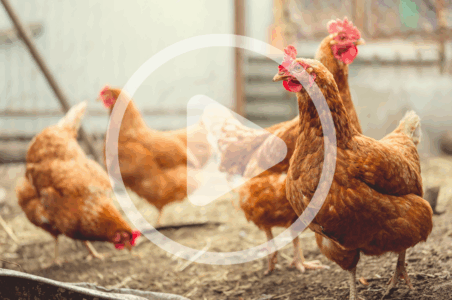
The True Cost of Chickens
Kenny Coogan: [00:00:00] Francesca, how are you practicing biosecurity measures at your place? Are there basic standard operating procedures that everyone should be doing to keep their birds healthy.
Franchesca Duval: Oh my goodness. Yes. This ounce of prevention is worth the pounds and pounds of cure. Aven influenza is a really tricky one because the birds don’t usually live long enough to create a strong resistance to it, and so a lot of them perish.
Aven influenza. It’s just one we hear about it so much in the news, and so that’s the one that people think about so much, but there’s actually so many diseases that could possibly come into flocks and all of it is totally preventable with the right biosecurity measures. So here on our farm, we’re not open for tours.
We don’t allow folks to come in and interact with any of the birds. And on the surface it sounds so unfriendly. People wanna come, they wanna hang out, they wanna see. See exactly how we’re running everything, but it’s for the safety of the birds because without people knowing it, they could be carrying all sorts of diseases on the bottom of their shoes, on their [00:01:00] clothing, even in their hair.
Josh Wilder: Welcome to the Mother Earth News and Friends podcast. At Mother Earth News, for 50 years and counting, we’ve been dedicated to conserving the planet’s natural resources while helping you conserve your financial resources in this podcast we host conversations with experts in the fields of sustainability, homesteading, natural health, and more to share all about how you can live well wherever you are in a way that values both people and our Mother Earth.
Kenny Coogan: Good day everyone. I am Kenny Cogan, and joining us today is Francesca , founder and owner of Alchemist Farm, the world’s first humane chicken hatchery that is zero waste and runs on a hundred percent solar power. She ships baby chicks nationwide and offers online educational classes on both chicken keeping and hatching.
She has a thriving presence on Instagram where you can see the day-to-day [00:02:00] happenings of the farm. She has been working with chickens for the last 35 years. Today we are going to be talking about the true cost of chickens. Welcome to the podcast, Francesca.
Franchesca Duval: So fun to be here. Thanks for having me.
Unexpected Chicken Expeneses
Kenny Coogan: We’re excited to have you, and people want to know how to save money on groceries and in their everyday spending.
And the idea of raising chickens is always popular, but when egg prices fluctuate and avian flu considerations take place people oftentimes calculate the chick cost. feed cost and the coop cost. Francesca, what are some chicken expenses that people often forget to factor in?
Franchesca Duval: A lot of people forget that when you have a few, you’re gonna want a lot more.
Chicken math is real. So I always recommend people build a bigger coop and have a bigger space [00:03:00] at least double from what they think they’re gonna have, what they think they’re gonna start off with. Because it’s much less expensive to build something once than to have to rebuild it twice. So build something for double the amount of chickens.
If you think you’re only gonna have three for your family, plan for six ’cause once you have them, then you enjoy having them. You’re gonna be wanting a lot more.
Kenny Coogan: As of today, we are breaking ground for a greenhouse on my property, and I did the same calculation. I might as well get the biggest one I can afford now, rather than try to scale up later.
Franchesca Duval: Build it once, and build it well and invest in infrastructure that’s gonna work.
You can definitely scab things together and put things together, but if you can invest a little more in the beginning, it’s gonna save you so much time in the long run and protect the birds better.
Favorite DIY Chicken Coop Ideas and Where Not to Cut Corners
Kenny Coogan: That’s a perfect segue into the next question because we have a lot of do it yourselfers listening, and they are very handy and they can make their own chicken coops out of recycled materials, and we often advertise those [00:04:00] and show them off in our Backyard Poultry magazine. What are some of your favorite DIY chicken coop ideas and what should we not be putting corners on?
Franchesca Duval: Never cut corners on the predator proofing aspect of it. A lot of people will buy poultry wire. It’s unfair that it’s called poultry wire and they think that it’s tied enough of a weave to protect the birds from predators, but it’s actually not. Weasels can get in there rodents, all sorts of different things. A raccoon can actually get little paw in and pull at the chickens while they’re inside of the coop or inside of the run. So never use poultry wire, always use either hardware cloth. Aviary wire is a tighter weave. Now those two things are a little more costly, but if treated properly, it can last 10 plus years, and so that first initial investment.
It is gonna be protecting your birds ’cause there’s nothing worse than raising them up into adulthood and then some predator comes through and you lose all of your work and your effort and the lives of the birds. It’s very sad. So [00:05:00] that’s where I recommend never cutting corners. And if you have your coop or run directly on the ground, making sure that you’re putting the aviary wire down on the outside like a skirt. I’m holding my hands up for those who are just listening, I’m making a corner with my hand and then I’m making like a skirt motion out. To be able to show that you wanna be able to make sure that your wire doesn’t stop right at the ground where the coop meets the ground.
You need to come out a little further ’cause predators always come to that corner and they’re gonna try and dig under, and when they meet wire, they’ll stop. So don’t cut corners there. And there are so many different amazing DIY setups. It all depends on what’s right for your backyard and how much space you have, whether it’s a mobile coop, stationary coop, that’s gonna look really different than the type of materials you’re gonna be using.
So first and foremost, ask yourself what kind of lifestyle you’d like with the birds. How do you envision interacting with them? And then creating any kind of a coop that in the long term, is gonna be super easy for you to be able to clean and interact with the birds ’cause if it’s easy to clean and maintain, you’re gonna be [00:06:00] doing it more often and your time with the birds is gonna be more enjoyable and not feel like a chore.
Poultry Predators and Prevention
Kenny Coogan: Like you mentioned, raccoons and weasels, it’s gonna get very costly if you lose poultry to predators. What, are there seasonal predators that we should be thinking about during the summer or are they ever present?
Franchesca Duval: It all depends on where you live. Here in Northern California where I am, Bobcats like to come around in the spring and the fall.
Bobcats can definitely do so much damage, but they can be outsmarted if you just pay attention to their patterns. I have either first in the morning dawn predators or dusk bobcats that like to come around and I use auto doors that keep the birds locked in for an extra hour passed dawn, and that prevents then the dawn predator from coming out.
I didn’t realize this was an issue until I came out and my numbers were really low, and so I sat out in the field from 4:00 AM on to see, okay, what is happening here? Because I didn’t, I couldn’t get a game cam big enough, and lo and behold, a bobcat was just [00:07:00] sitting there waiting for this auto door to open just like it was, like the drive through at Mickey D’s or something like, all right, here’s my day, and here comes my meal.
I was blown away. And so now we just have automatic timers that. Make sure the birds are kept in a little bit longer in the morning. And then go in a little bit earlier at night. So that’s how you can outsmart something like that. Hawks definitely are seasonal as well. They’ll move through and if you can prevent them any predator from getting a taste of your flock, they won’t be coming back.
But once they’ve gotten a taste, then they know, oh, this is delicious. Everything likes a taste of chicken and they’re gonna keep coming back for more. So everything you can do upfront to make sure that they never get to the birds the better. And something else I wanted to mention before about the DIY piece is that I love investing some time and it’s not a lot of money into making your own DIY waterer and feeder because you can save so much time and money in, chore hassle in making sure that you have gravity fed feeders and waters. I can [00:08:00] maybe send a link in the show notes to my favorite ports that you can just put directly into any kind of plastic container, any kind of garbage can that you have sitting around any kind of size, and the chickens can just put their little heads into these.
Chicken feed ports and it’s waterproof. They’ve lasted for years and years for us. Super UV resistant, and then you can just fill it from the top and you’re not having to shake out the feeder if there’s any kind of droppings from the birds. And then also gravity fed, waterers, the gravity fed waterers you can with very simple hardware create.
A gravity fed system that comes down from a big plastic barrel, like a pickle barrel or something like that. You can find these all the time, and then goes down to a PVC system with chicken nipples, and I love this because then the water always stays clean and it doesn’t attract wild birds. We’ll talk about the importance of not attracting wild birds later, but this is my DIY recommendations for now.
Really future-proofing your chore time with the water and the feed in particular.
Kenny Coogan: While some hawks and owls migrate through, [00:09:00] I also noticed an influx of predation during the nesting season when the birds of prey have their chicks. Because they’re looking for food as well.
Franchesca Duval: Oh yeah, all of it. Mountain lions cougars. I don’t have bears here, but bears definitely have a season to them. So it’s all about being aware of what’s moving through your neighborhood. And chickens are really great for that because it forces us to pay attention to the seasons they get. They get us out at dawn, they get us out at dusk to make sure that they’re safe and we can really see all this other nature on display that we wouldn’t normally see if we’re just hanging out in the inside.
Protecting Poultry from Avian Influenza and Disease
Kenny Coogan: Another financial factor is the loss of birds due to avian flu. And of course that is increasing the egg prices. And let me just back up and say just last month or the month before, we had a full podcast on preventing poultry predators that we encourage listeners to go check out because we talk about 40 minutes of aerial predators land [00:10:00] predators predators from the water daytime, nighttime a full episode of poultry predators.
But maybe a problematic thing for poultry that people don’t think about are diseases. Francesca, how are you practicing biosecurity measures at your place? Are there basic standard operating procedures that everyone should be doing to keep their birds healthy.
Franchesca Duval: Oh my goodness. Yes. This ounce of prevention is worth the pounds and pounds of cure. Aven influenza is a really tricky one because the birds don’t usually live long enough to create a strong resistance to it, and so a lot of them perish.
Aven influenza. It’s Just one. We hear about it so much in the news, and so that’s the one that people think about so much, but there’s actually so many diseases that could possibly come into flocks and all of it is totally preventable with the right biosecurity measures. So here on our farm, we’re not open for tours.
We don’t allow folks to come in and interact with any of the [00:11:00] birds. And on the surface it sounds so unfriendly. People wanna come, they wanna hang out, they wanna see. See exactly how we’re running everything, but it’s for the safety of the birds because without people knowing it, they could be carrying all sorts of diseases on the bottom of their shoes, on their clothing, even in their hair.
I never show any birds in any kind of exhibition or a fair, any bird that leaves the property stays off the property and doesn’t come back to the property. So I’m, I’ll have closed flocks and maintain a closed flock to be able to prevent new. Transmission of possible diseases here. So that’s how I’m preventing it on the human front.
If I have any friends come over who have chickens, they know that they need to wear a separate pair of shoes and they shower before they come. And then they also don’t go anywhere near any of the birds. So they’re like coming, they park, they come directly to my house. People who work here with me also don’t interact with any other flocks.
Don’t go to feed stores, don’t go to fairs. They also have we all have only one pair of [00:12:00] shoes that we wear when we’re interacting with the birds and a fresh outfit when we’re interacting with the birds. That’s something that’s really easy for everyone to have in their own homes. Have one pair of boots when you’re going out.
Have your kids have one pair of boots, because even wild birds too and wild animals can transmit avian influenza. They found avian influenza in mountain lions in skunks. There’s some great resources that I can send you, Kenny, if you’d like to link it for people to be able to see and track even influenza where it’s not just wild birds, but it’s all sorts of other critters and creatures too that can transmit it.
So I am really careful not to attract wild birds as well, particularly waterfowl, because every year abian influenza is a thing. It happens just like cold and flu season for humans. It happens for birds, and it starts in the east coast. And it comes to the west coast by the migratory birds, and it can be transmitted in their droppings.
So as they’re flying, pooping in the air, it’s actually dropping potentially apian [00:13:00] influenza in different areas. That’s why you have to be really careful. We don’t have a pond here on the farm, and we would love to have a pond, but it’s a total liability for us because it attracts the waterfowl. And birds love to poop, usually right as they take off and fly.
So right around where a pond is a pretty potential rich area for pathogens. So no ponds here. No ponds in my neighborhood, and I recommend folks who want to be keeping chickens not to have a pond near where the birds are.
Kenny Coogan: I just visited a zoo and they had some walkthrough aviaries. There was a lot of signs about if you have poultry at home, and then in parentheses they told the general public what poultry consists of they said, do not visit the aviary.
Franchesca Duval: Yep, because people just probably don’t even think about it. They might just been cuddling a bird, and sometimes birds can be sick and not have any kind of signs, and they could still be carriers or different things. [00:14:00] So that’s the hard part about keeping chickens.
I don’t mean say any of this to freak anybody out, like keeping chickens 99% of the time is just super easy, sweet, and fun. You just gotta be aware of these preventative measures. Always washing your hands before and after dealing with them too. Even though all my birds are clean, I’m part of the NPIP program and that means that my birds are tested a couple times a year to make sure they’re all free of different diseases, to be able to ship over state lines.
It’s what allows me to be a hatchery. I know all my birds are clean and healthy. I’m still washing my hands every time before I work with them. And every time after.
Marek’s Disease in Poultry
Kenny Coogan: For Backyard Poultry Magazine for the year 2025, I’m doing the thickened profiles of different rare and endangered breeds. And coming up, I did an article on one heritage breed where one of the breeders told me that breed is extra vulnerable to Marek’s disease, which I was surprised to hear. Francesca, can you tell the listeners what is [00:15:00] Marek’s disease? And does your flock get vaccinated for that?
Franchesca Duval: Marek’s is the other really common one that people hear about. It’s one that’s really visual and when it happens, it’s really debilitating and sad.
So that’s another, even influenza and Marek’s are the two big ones that people hear about. There’s so many other things, but Marek’s is a neurological disease, and so it can take a lot of different forms. Some birds can have it. And be carriers and nothing ever happens to them. Other birds, if they get it, they can they can attack their eyes and so they can go blind.
Other birds, what’s most commonly seen is lameness, where suddenly their legs don’t work anymore and they can’t walk. So it can take a couple different forms because there’s many different strains of Marek’s. Marek’s is like tetanus. It’s in the soil pretty much everywhere. And flocks that have really high stress are more susceptible to it.
So long ago, when I started my breeding program over 10 years [00:16:00] ago, I was sourcing different bloodlines from different breeders all over the United States to try and make something of my own. I work with my own birds and I found that a lot of the birds were susceptible to Marek’s. And so instead of vaccinating for it, because the type of vaccines that I was able to access at my level of a breeder were just to be able to give shots to the birds.
And it was only covering one or two strains of Marek’s. But there’s so many different ones. I made the choice not to vaccinate for Marek’s and to breed for resistance instead. And it’s been six years since I’ve lost a bird to Marek’s and I’m really careful with how I breed to breed really strong birds because I wanted people to also have a stronger, more resistant program from my birds.
And I always tell my customers to make sure they keep their flock stress low. I’m really aware of that. Like there are natural stressors like high heat or very cold that we just can’t control. But I make sure not to stack [00:17:00] stressors during a time of really high heat. I am not integrating any other birds into my flocks.
That’s another stressor. I don’t have dogs that are like barking at the birds incessantly. My kids know how to interact with the birds, and they might like shuffle around and play with ’em and chase ’em a little bit, but not to the point where they’re causing the bird’s heart rate to go up so high that they’re just totally stressed out.
Again, just being chased and chased. So there’s really, some simple protocols that you can have to keep flock stress, low vitamins, electrolytes, minerals during big, high heat waves, making sure that they can have their cool downs, things of this nature to be able to keep their immune systems high.
It’s just like humans. A lot of us, when we’re overstressed, our immune systems go low. So we gotta think about the birds the same, keep their stress low, make sure their food is clean, their water’s clean. They constantly have access to what their bodies need to repair themselves and keep them healthy.
Chicken Breeds for Production
Kenny Coogan: Today’s episode we’re talking about the true cost of chickens, and it’s gonna [00:18:00] get costly if you purchase breeds that are fanciful but are not good egg layers or heavy meat birds that aren’t great at food to meat conversion. So what are some of your favorite chicken breeds for production?
Because I certainly have been on those websites where I’m seeking frilly feathers and feathers on the legs and different colors, and then it, we say lay one to three eggs a week.
Franchesca Duval: Yeah. Yeah it’s tempting to go for those kind of breeds, and I’m a firm believer that there’s a chicken breed for every human, just like there’s a breed of cat or dog for every human. So it all depends on what you’re looking for your experience with the birds. Some people really want the chickens as pets.
Other people want them to keep down ticks in their yard. They need like really good forages that are gonna be out there in the tall grass that are predator aware and wise. Some people don’t give their birds any names, but are just looking [00:19:00] for straight production egg layers. Know this if you are going for just straight production egg layer, like a pearl leghorn, they’re known to lay sometimes seven to eight eggs a week, meaning more than one egg a day. They’re not gonna live very long. There is a cost to laying eggs at that high of a rate, and oftentimes those birds are also susceptible to different kind of cancers. So they’ll live one, maybe two years max, lay a bunch of eggs and then expire. So depending on your your desires for your flock and what you’re looking for you may not want the highest production layer out there. You may want something that maybe lays five eggs a week, four to five eggs a week, and that’s still reasonable. That bird can live to 14 years of age. I’ve got customers who have birds that are as old as when we first started the hatchery, and something that I’ve really focused on in my breeding program is breeding for climate resilience and egg laying ability birds that can take really high heat. Birds that can thrive in the snow and birds that are gonna lay really well. My Azure [00:20:00] Egger line, they’ll lay five to six eggs a week. Same with my Alchemist Blues. They’re guaranteed female. They’re a smaller framed bird. And so they’re gonna be not eating tons of grain, but they’re gonna be laying at a really high rate for you.
They can take up to 113 degrees ’cause that’s what it gets to be here on the farm. I have customers in Arizona where it gets hotter and the birds have thrived, but I don’t know exactly what that’s clocked in at in terms of the heat and then they run around just fine in the snow. So I like to go for breeds that I’ve created here, because I’m looking for what I’m looking for, which is.
A really high layer that’s climate resilience and that’s just resistant to all sorts of diseases and issues. So that’s my favorite.
What is a Humane Hatchery?
Kenny Coogan: In the introduction I mentioned that you are a humane hatchery. What is your definition of that? What does that mean?
Franchesca Duval: This is such a good question because that word humane means so many different things to different people.
There is no gold standard. There’s [00:21:00] no testing or like benchmark for what I’m doing out there. I just didn’t see what I wanted when I was going to order chicks from big scale hatcheries, and so I created something on my own. All of my birds are out free ranging on their pastures. There are no breeding cages. There’s no warehouses here, and that’s pretty controversial. A lot of people say, Hey, you wanna keep the birds safe from avian influenza? You wanna keep them inside of warehouses. You wanted to keep them perfect climate control. That’s just not how I would wanna live. And so that’s not how I choose to breed or run my business or my farm.
So all of my birds are outside in sunshine, able to live the lives they wanna live and dust bay. So the adult birds, my breeding flocks, I believe are treated in a more humane way. And when we hatch none of our male chicks are euthanized upon hatch as they are in many large scale hatcheries. This is kinda the dark side of the chicken hatchery world in raising chickens that a lot of people don’t talk about. They don’t realize that of course with many of [00:22:00] these birds, it’s a pretty much a 50 50 split. If you’re hatching out a hundred chicks, 50 of those chicks are gonna be male. And pretty much everybody wants egg layers. They’re not interested in roosters, and so 50 of those hens get sold. But what happens to those other 50 roosters?
A lot of them are just put down or ground up in dog food or things like this. You could Google this if you want to get a little more information. So I knew that I couldn’t support that and so I had to find a different way for our farm. And so I started to partner with different families in our local area who wanted to raise those roosters for meat, and they were really grateful for that extra food source.
And this is something that I’m passionate about because I know that food insecurity is a huge issue for people certainly all across the world and in the us and there are. Billions with a B of male chicks that are put down worldwide. I know if we could get creative with that food [00:23:00] source, food insecurity doesn’t have to be what it is. So we donate those males to families who raise them for food, and we also started shipping them two years ago. So I talk about it a lot on our Instagram feed and for our newsletter subscribers. If anybody wants male chicks to be able to raise for food, we ship them to them and they just pay the cost of the shipping.
Kenny Coogan: I work at zoos and aquariums for about 15 years and all of the birds of prey, even like the bigger cats lots of zoo animals and aquarium animals eat day old chicks. Sometimes even like people who have a pet monitor lizard will also buy frozen day old chicks. And I also often fought that, know these chicks are a straight run. They’re not just the males that people aren’t buying. So there’s still billions of male chicks that are being euthanized, even though there is an outlet for day old chicks. I have a master’s in global sustainability with a [00:24:00] focus on food safety and food sustainability so yes, humans also need meat and food, and it just seems like a win-win for all this, half of the chicks that we’re hatching out we could be providing food for animals, but also people if they’re willing to raise them a little bit older.
Franchesca Duval: Yeah, I think there’s just a education piece that needs to be put into place there. And education on this is happening. Here’s a solution if you would like to, to take part in that and get to know your food sources a little better.
A lot of people wanna know what’s in their food these days. How is it raised? How is it treated along the way? Is it going to actually nourish their families? And so this is a great opportunity for people to get closer to their food sources and if they do eat meat, to really close the loop on that protein ’cause it’s a powerful process. To raise your own food and then consciously take that life and then have that life nourish you. It’s a extremely, talk about DIY, the max, it’s a powerful process.
Kenny Coogan: We are going to take a quick break to hear a [00:25:00] word from our sponsor, and when we return, we’ll be focusing on eggs.
INSERT AD
Kenny Coogan: We are back with Francesca , the founder and owner of Alchemist Farm.
How to Feed Chickens Cheaply
Kenny Coogan: To get eggs, you must feed chickens some good food. What are some ways to reduce the cost of chicken feed? Because I think last month the Livestock Conservancy, Jeanette Beranger was on and she said it’s very expensive to raise chickens and to get good quality eggs.
So Francesca, how can we reduce the cost of chicken feed?
Franchesca Duval: Lots of people will turn to fermenting their feed. That makes it stretch longer. It’s more digestible for the birds, so they’re gonna be making more nutrient dense eggs for you, and it makes the grain last twice, sometimes three times as long.
Past fermenting feed something that’s really overlooked and something I’m really passionate about talking about is saving all of your table [00:26:00] scraps and your kitchen scraps in a composting bucket, and then once a day giving that to your flock because that’s gonna be giving them more diversity in their diet, more nutrient rich eggs.
Not all eggs are laid equal and created equal. It’s all based on what the birds are being fed, how they’re being treated, and you’re gonna be seeing much bigger yolks, much denser yolks, healthier eggs from birds with a diverse diet. I. So you can cut down on your feed bill by also helping with a huge ecological problem, which is all of the food scraps that go into our landfills and cause all of these greenhouse gases feed it to your birds.
It’s less trash that’s going into the landfills and the curb, to go out into the curb each week. It’s less work for you and it cuts down on your feed bill. There’s very few things that chickens cannot eat, and so this is a great. Way to be able to divert your waste stream into more eggs. Pasturing the birds too, gets them out and eating all sorts of grubs and bugs and things, and the grasses, and so that helps keep ticks and different bugs down in the yard, [00:27:00] and it’s gonna be cutting down your food bill.
Keeping Egg Production Up
Kenny Coogan: What are some tips on keeping egg production up throughout the year?
Because once the natural daylight starts getting shorter, sometimes the birds take a break. If they’re molting, they also take a break.
Franchesca Duval: This depends on your relationship with the birds. Some people like to give the birds their natural break. In the wintertime when the daylight hours are less, this will prolong the life of the birds and it makes it so that they’re gonna be laying really strong come the springtime.
But if you are someone who can’t afford that, and you just wanna be able to make sure that you’re getting eggs year round. Then people will put supplemental light in their coops, and it doesn’t have to be very much, this can be just a small light bulb that’s in the corner of the coop. You can put it on a timer. I like to have it be on the night side of things as opposed to first thing in the morning if you’re gonna be doing this. Because if it’s first thing in the morning that the timer goes off, then suddenly the birds are just awake and it’s rude on their nervous systems versus if they’re. The sun’s going down, but they go [00:28:00] into the coop and they’re like I guess it’s still just like dusk and daytime in the coop.
And you make sure you have their food and their water inside the coops. They’re still eating and they’re still drinking ’cause you’re prolonging their day inside that coop. And that will extend their egg laying through the winter. They’re not gonna lay as strong as they will like year round. The birds do need some sort of, a little bit of a break unless you’re really giving them some super excellent nutrition.
That’s a whole different episode of diving into what that looks like. But supplemental lighting, very simple to do, and you want at least 14 hours a daylight. Some people say 16 hours a daylight, so you can just adjust your timer accordingly for that.
Make Money by Selling Colorful Eggs
Kenny Coogan: One way to maybe save money is by selling eggs. But also people like to just have a basket of colorful eggs. So what are some of your favorite breeds of chickens that lay non-white eggs.
Franchesca Duval: I suppose this is my wheelhouse. So I started the hatchery because I wanted to have a humane option and also ’cause I love [00:29:00] egg color. We have birds that lay dark chocolate eggs like our French Black Copper Marans and French Blue Copper Marans.
And if you just Google the Marans and go to any kind of hatchery, you’ll be able to get them. But not necessarily laying the dark chocolate eggs that you’ll see on our website, our Instagram feed, if you look, these are true chocolate gorgeous eggs. So we’re spending a little bit more upfront to get the birds that are actually gonna give you the egg color that you want.
Our Moss Eggers are a lovely breed that lay these dark rich mossy undertone, greens, all different shades which are really fun. A flock of just those alone will lay you really interesting eggs that are all different shades of green. Our Alchemist Eggers lay all sorts of different speckly green eggs.
Our Sage Eggers will lay a sage speckled egg. Summers lay like coffee colored egg with dark speckles. Our Azure Eggers and our Alchemist Blues lay a bluish greenish egg. So whatever egg color you’re looking for, we got the rainbow for you. We even have some pink tinted eggs from our Double Silver Laced Barnevelder and Bantam cochin, which are smaller breeds, [00:30:00] but they still hold their own all laying. They lay pretty steadily. And the bantam coachings can go broody. So they can help raise some chicks for you, which is pretty awesome if you don’t want to incubate your own eggs.
Why Raise Chickens with Colorful Eggs
Kenny Coogan: A question that we get asked often and that you get asked all the time is, do colorful eggs taste different? And I’m gonna answer that because we’ve answered it many times. They taste the same. Francesca, what is the point of having a beautiful colored egg?
Franchesca Duval: There has to be some art and beauty in the world, and it’s really nice to connect to each one of your birds. If you’re a small backyard flock keeper, say you only have six eggs.
It’s nice to know which one, like Susie laid, or Henrietta or Josie, like Josie lays the green, Henrietta lays the blue. And so that’s a way to be able to connect deeper with your food sources and it really gets kids excited to go out every day and see that daily Easter egg hunt gets them involved with the chores, gets them off the screens and out into the natural world.
So colorful eggs. I think are [00:31:00] definitely worth it.
Hobby Farm to Profitable Business
Kenny Coogan: So although they don’t provide extra nutrition and they don’t taste different, selling colorful eggs is one way to make some profit from your poultry. What are some tips for turning a hobby chicken farm into one that is profitable?
Franchesca Duval: Look at your area, what’s not around in your local area?
Do you want to be having people come and visit? It would break my rules of being able to keep good biosecurity, but for some people they’re comfortable with that and they love to offer that ability of people to come and see the birds that lay in the eggs. Selling different colored eggs is a really good way to be able to do it because it makes your eggs stand out from the rest of the farmer’s market.
People are walking down at different stalls and they see white egg, white egg, and then whoa, here’s a carton with green and blue and dark brown. They’ll probably spend a couple extra dollars for that, and so it makes up in the difference in the long run of what you paid for those chicks.
Benefits of Chicken Keeping vs Time and Effort
Kenny Coogan: Francesca, what are your takeaway benefits of keeping chickens versus the [00:32:00] time and effort?
This can also be its own episode, but in summary if listeners, wanna add a couple birds to their homestead is it beneficial to keep chickens?
Franchesca Duval: Absolutely beneficial in 2020 when the world had to slow down and everybody was staying home. I received countless emails from people thanking me for introducing them to chickens and having them in their lives because they actually got people outside out of their houses into the natural rhythms, particularly into morning sunlight, and then the sunlight at dusk.
And this is really important, a really important time for every human to be outside to regulate our circadian rhythms. So chickens. Give us that gift. They call us to be outside and they’re not such a huge animal like a cow or even goats that need a lot of space. Pretty much anyone, regardless of the size of their backyard, can have chickens if they choose the right size.
We have some breeds of chickens that are no bigger than my coffee cup. Our cera, they’re [00:33:00] so small and people can still have that feeling of that homesteading lifestyle and collecting their own eggs and being out and doing those simple chores. It’s really bonding for parents and kids to be able to do those chores together.
And it’s something that children can easily do. Kids can go out and collect the eggs, can kids can throw some feed for the chickens. And so it gets them learning those soft skills of how to be around animals, how to have a rhythm to their day, how to have some chore time and. The companionship that they can offer.
I have some customers from all over the United States who will sit down and watch Netflix with their chickens and give ’em their own like bowl of popcorn. And there’s everything from, the house chicken that has a little outfit or a chicken diaper so it can stay inside to the chickens that are outside that don’t have the names.
There’s so many different realms within the chicken keeping world and chickens ask so little of us and give so much in return. I can’t think of any other nutrient dense food that’s created by any other animal where the animal doesn’t have to give of their flesh or the animal doesn’t have to become pregnant to create [00:34:00] milk.
This is a natural biological process that chickens have, and it would actually harm them to not lay eggs. They have to lay eggs to stay healthy, it doesn’t hurt them at all. So it ticks a lot of boxes for everybody. Even people who are vegan will sometimes eat chicken eggs that they’ve raised of their own birds because they know like this is a natural thing. It’s not hurting the animals. So there’s a chicken breed for everybody and they just offer us so much and ask so little in return. I think they’re absolutely worth having. They’re a gateway animal to a whole different lifestyle that helps us connect to our food sources, pay attention to our waste streams, know where our food’s coming from and how it’s treated along the way.
I love them.
Kenny Coogan: I had a Serama Chicken, which is a coffee cup sized Bantam named Atila the Hen.
Franchesca Duval: Love it.
Kenny Coogan: Thank you, Francesca, for a great conversation today about the true cost of chickens.
Franchesca Duval: Happy to be [00:35:00] here.
Josh Wilder: Thanks for joining us for this episode of Mother Earth News and Friends. To listen to more podcasts and get connected on our social media, visit www.motherearthnews.com/podcast. You can also email us at Podcast@OgdenPubs.com with any questions or suggestions. Our podcast production team includes Kenny Coogan, Alyssa Warner, and myself, Josh Wilder.
Music for this episode is the song Hustle by Kevin MacLeod. The Mother Earth News and Friends podcast is a production of Ogden Publications.
Jessica Anderson: Until next time, don’t forget to love your Mother.





