

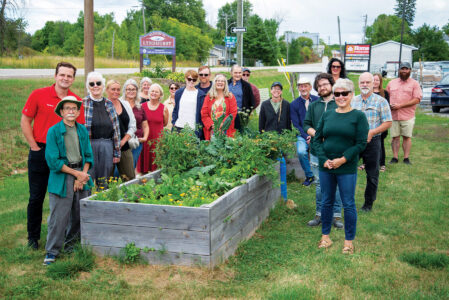
No matter where you live, there are ways to share your green thumb to benefit others. Here’s a story of two community garden projects in Canada, one in the rural area in which I live and one in a nearby city.
Growing More Than Food in the Lyndhurst Community Garden
Lyndhurst is a charming small town in Eastern Ontario, Canada, with a population of 300. On summer evenings, you’ll find many residents out for a walk, enjoying a friendly chat in the quiet streets. Should you decide to pop into the local post office, however, you’ll find something unusual: a refrigerator.
Each week during the growing season, volunteers fill what’s lovingly called “The Sharing Fridge” with fresh organic produce from the community garden. Residents of the village are encouraged to take what they need. Inspired by the initiative, many gardeners bring in their extra produce to share, increasing the abundance for everyone.
On an average week, the fridge offers a selection of cucumbers, summer squash, tomatoes of all types and sizes, beets, carrots, peppers, several different types of kale, and a selection of fragrant herbs. Families outside the village who are unable to make it to the fridge for various reasons, such as not having a vehicle, can sign up to receive weekly deliveries of fresh produce.
You might imagine that such a project would require an enormous team, but this isn’t the case! In its first year, only four volunteers grew 400 pounds of produce in three raised beds. Two community members built a couple of raised beds and filled them with soil near the village’s hardware store. St. Luke’s church provided the first grant to get the garden started, and the fridge was purchased with a township grant.
Now in its second year, the garden has expanded to include nine volunteers growing food in 10 raised beds in two locations, and teachers and students at the elementary school have joined the efforts by tending raised beds at the school. Concerned about food insecurity in the area, a local couple, David Duggins and Vicki Woodside-Duggins, stepped in to help fund the project. Village businesses have also supported the garden through cash or in-kind donations each year.
Community members who have benefited from the bounty call it a “godsend” and speak of improved physical and mental health from their increased access to fresh produce. Volunteers are enjoying the journey and are glad to be growing this heart-based project.
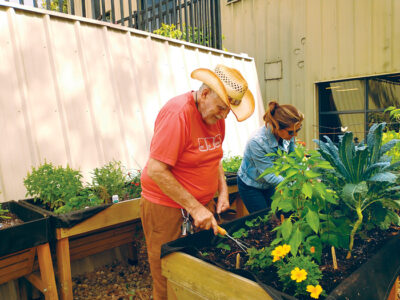
Cultivating Health and Healing in the LLGAMH Community Garden Lanark, Leeds, and Grenville Addictions and Mental Health (LLGAMH), a community-based agency, serves over 3,500 clients a year in the city of Brockville and the surrounding townships. LLGAMH offers a range of services and programs, including community and residential addiction treatment, counseling, grief support, wellness education, youth programming, and more.
At the main location, some existing raised beds weren’t being used and just needed a bit of green thumb inspiration to get going. One experienced gardener reached out, offering to help. After a few phone calls and an introductory visit, the garden was launched. When they heard about the project, local businesses were happy to support it with donations of free plants and soil at cost.
Now, people served by the agency can enjoy the garden in the courtyard and take home produce if they’re able to prepare food at home. Marvin Sweetland grew up on a farm. Now, at almost 83 years old, he enjoys the chance to use his gardening skills again. He shares, “I love to work in the garden, watering and tearing the weeds out. I can’t do gardening on the ground anymore, so these raised beds are great!”
Louise Coleman, wellness case manager, took the lead on the project. She helps clients manage their diabetes. “Working in the garden and seeing clients have access to healthy food is a great feeling,” she says. She’s delighted that most of the produce goes directly to the lunch program that serves vulnerable clients at the drop-in center. Plans are already underway for an expansion for next year. All it took to get this project growing was a few visits from an experienced gardener.
I hope that learning about these projects has planted some seeds for how readers might share their green thumbs in their own communities!
Colette, Ontario, Canada
DIY Soil Sifter from Junk
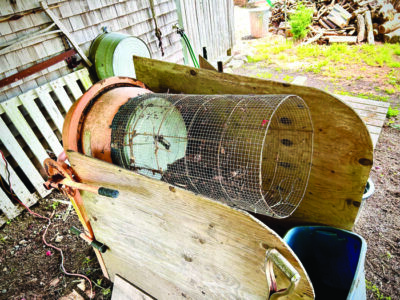
I had an old cement mixer that was useless for its intended purpose, so it sat around for several years. I saw a video on YouTube where a cement mixer was used to sift soil, so I took that concept and made a sifter using materials I had on hand. The main barrel cage is from a scrap piece of concrete remesh, and a metal trash-can cover fits perfectly over the tub opening. The cage is secured to the tub with perforated metal strapping and self-piercing screws. I wrapped the remesh cage with some 1⁄2-inch metal hardware cloth left over from a chicken project and secured it with zip ties. There’s a plastic mortar tub with a pull rope directly under the sifter, scrap plywood and random stakes make up the container box, and the old blue tote catches the rocks and debris as the barrel is lowered. I bought a piece of 1/4-inch hardware cloth that I can quickly add as a liner for a finer end product. That was $15; everything else was stuff I had. When the mortar tub is full, it acts as a sled and can easily be pulled to the garden.
Glenn, Rhode Island
Never Mow Again
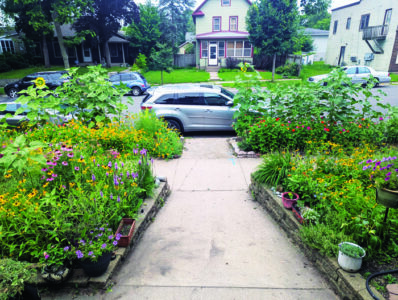
I got sick of mowing my front yard and wanted something more beautiful that would also support pollinators. So, in a couple of stages, I turned my entire front yard into a perennial and self-seeding annual flower garden. I dug up the sod, loosened my sandy soil, and added several rounds of composted horse manure.
Over the course of four years, I planted mainly drought-tolerant perennials and self-seeding flowers that benefit pollinators. The bees and butterflies are especially drawn to the bee balm, black-eyed Susans, coneflowers, zinnias, bachelor’s buttons, and sunflowers. Each spring, I add more dirt and compost and lightly mulch. My county provides free wood chips that are made from local yard waste, so I use this as mulch. I enjoy watering during dry spells and find myself weeding for fun. I planted everything densely, so there isn’t much room for weeds to take hold. The “weeds” I do have are usually too many self-seeding plants. So, if you like meadows, believe me, you can have one!
Rachel, via email
For the Love of Worms
My thriving colony of red wriggler composting worms descended from a small collection of worms provided to educators at a Green Education forum at Wilder Institute/Calgary Zoo over 10 years ago. Living in a northern climate, the worms were cherished inside my third- and fourth-grade classroom and regarded as “nature’s heroes.” In our curriculum unit, “Waste in Our World,” they held a special place as decomposers extraordinaire, and we’d use their compost to grow our seeds every spring as we studied “Plant Growth and Change.” Through our daily care of the worms, students made an indelible connection with these organisms that exemplify reciprocity and sustainability. Students demonstrated exceptional empathy, nurturing the worms’ habitat and charting their growth. Now that I’m retired, the red wrigglers remain hard at work with me at home in a quiet, dark room (their preference) on the lower floor. The descendants of the original worms live on and will be with me as long as I’m in my home.
Pam, Alberta, Canada
Versatile Tarps for Mulch
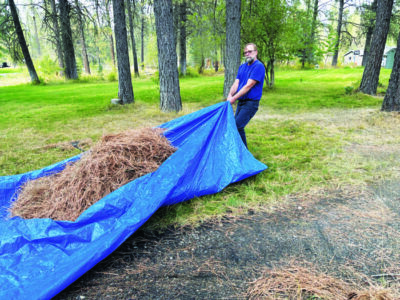
Our yard has an abundance of pine trees that shed needles in fall. My husband said moving debris with a tarp isn’t a new idea. I said if I’d read it in Mother Earth News years ago, I wouldn’t have been loading them on the bed of the pickup for so long. So, here it is. The tarp makes it much easier to move them, and it’s less back-breaking. I move loads around the yard and place the needles on plants for winter protection.
Carol, Washington
Poultry on Grass
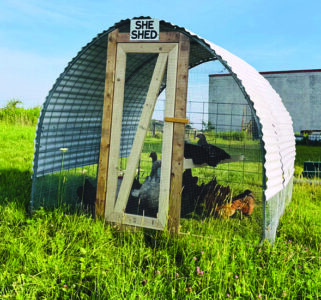
Eggs taste better when my chickens can hunt and peck in the grass, and it saves on feed costs too. However, I’m a teacher and am busy supervising kids, so I can’t watch my chickens as they free-range during the day. We have a lot of predators, such as coyotes and foxes, that would snatch my birds up while I was away. I decided to try a movable chicken tractor. Working with limited funds, I made use of what I already had available. This chicken tractor is made of three cattle panels, some 3/4-inch electrical conduit, scrap 2x4s, and 1/2-inch wire-mesh fencing, all held together with self-tapping metal screws. The flexible plastic roofing makes it light enough to drag from place to place so that my flock can have fresh grass every couple of days.
Josh, Minnesota
Winter Cabbage Salad
We like to support farms close to us all year round, and cabbage is one vegetable I can source locally into the winter months. This recipe is easy and is a family favorite.
Ingredients: For the salad, you’ll need cabbage. I use both green and red, chopped thin. You can add in other veggies, such as carrots, cut or shaved thinly. For the dressing, you’ll need oil. I recommend a light olive oil plus another, such as avocado or canola, ideally half and half. You’ll also need rice vinegar, mirin (a Japanese sweet seasoning wine), ginger (grate and then squeeze out the juice), soy sauce, and sesame oil.
Directions: Overall, use less oil and more of everything else than you would for a regular salad dressing. For a big mixing bowl of cabbage, I use about: 1/3 cup oil, 1/3 cup rice vinegar, 3 tablespoons soy sauce, 2 tablespoons mirin, 2 teaspoons ginger juice, and 1 to 2 tablespoons sesame oil.
These are approximate ratios. Taste and adjust to your preferences as the marinade soaks up, adding vinegar for tang, soy sauce for saltiness, and mirin for sweetness. Combine everything in a flat-bottomed glass dish and mix it periodically. It can be ready to eat in an hour if you mix a few times.
Bennett, Wisconsin
Source Good Food for Less Money
About 40 years ago, a group of young parents felt we could save money on our food bills by buying our food in bulk and dividing it among ourselves. From the beginning, we were successful in doing just this. We found we could save about 30 to 35 percent on our food expenses. We gathered 17 families for this project to buy food cooperatively, and we’d meet once a month at someone’s home to decide what foods we were going to buy and in what quantities. We found wholesalers that were willing to deal with us directly. We bought fresh fruit, cheeses, canned goods, meats, seafood, and household items in quantities that individual families couldn’t afford or didn’t have the space to store. We had to adjust our thinking and planning.
Each family needed to plan on having a larder or pantry in their home. We encountered a few families who didn’t seem to catch on to cooperating in our buying (they’d only want to order a pound of brown sugar, or two chicken breasts). We eventually overcame this problem. Forty years hence, our children are now middle-aged and gone from our homes. Our numbers have shrunk so that we no longer have the number of families needed to sustain this system. We’re also aging, so we’re physically unable to sustain the work that some of us did by growing some of our own food.
This wholesale food buying has changed somewhat in that we now attend the local Amish wholesale produce auction held weekly from April to November. We usually bid in smaller quantities we feel we can handle by canning and pickling. I buy 50 pounds of hard red winter wheat to store in a garbage can in our larder, then grind it into flour as I need it to bake my own bread. An additional advantage we’ve gained from these projects is that our eldest granddaughter took her college degree in sustainability and is now employed running a gleaning program in New England.
Frederick, Pennsylvania
Digestive Tea Recipe
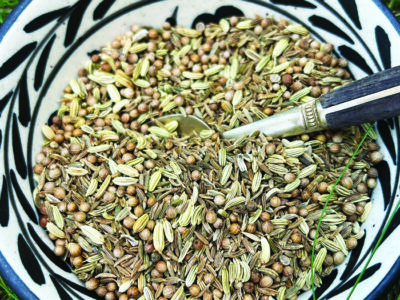
Combine equal parts by volume of whole cumin, coriander, and fennel seeds. Lightly toast the seeds in a dry skillet until they become aromatic and turn slightly golden in color. Allow to cool and then store in an airtight container for later use. To make the tea, place 1/2 to 1 teaspoon seeds per cup of water into a pot and bring to a boil for 5 minutes, then strain. During the cooler months, I like to add a slice of fresh ginger root to the pot while it boils for added warming properties. I like to drink 1/4 to 1/2 cup of tea with meals as an aid for good digestion, or consume it anytime to ease digestive discomfort.
Brynn, via email
Make Your Muffins More Magical

Too many muffin recipes I come across consist of a relatively plain batter and a fruit, nothing more. I realized that by adding some combination of a citrus zest (orange or lemon, usually a tablespoon); favorite spices, such as 1-1/2 teaspoons of cinnamon, nutmeg, or cardamom; and 1/2 cup of chopped nuts, I can add nutrition, texture, and flavor to any recipe (these amounts apply to recipes for 12 standard muffins). Also, for muffins to achieve a fluffier texture, you can put your batter into preheated (hot!) muffin tins or increase your baking temperature by 100 degrees F and drop it to the recommended temperature when you place your muffins in the oven.
Leah, Michigan
Make Art from Onions
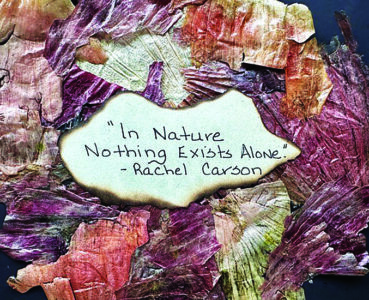
I gathered onion skins from a bin at the farmers market. While I’ve heard of onion-skin paper, I’ve never made it myself. Why not give it a try? I chose a mixture of dark-red and yellow skins. I laid the skins in a shallow casserole dish and covered them with water. In three days, they went from being somewhat stiff to flexible to pliable. I then laid them on a sheet of plastic wrap to dry, overlapping the edges to create a pattern. The skins were nearly dry in about three hours.
Next, I lightly coated the bottom of a heavy skillet with corn oil and placed it on top of the onion skins. The weight flattened the skins and the oil kept them from sticking. By the next day, the skins were flat. Using the tip of my finger, I smeared a thin layer of hobby paste over them. The paste dried clear and shiny. The skins were now strong enough to use as a canvas. You could add dried herbs to create more dimension, paint some wildflowers on the canvas, or, as I’ve done here, add a meaningful quote.
Sherry, California
We Pay for Top Tips
Do you have handy home, farm, or garden advice? We’ll pay you $25 for each tip we publish, plus another $25 if we use your photos.
So, send your niftiest tips to us at Letters@MotherEarthNews.com.
Originally published in the December 2025/January 2026 issue of MOTHER EARTH NEWS magazine and regularly vetted for accuracy.





