

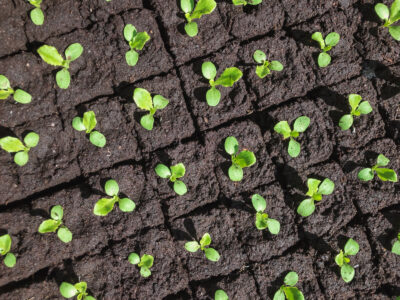
Wondering when to transplant lettuce seedlings outdoors? Want to know when to transplant brassicas and tomatoes? Read on for some simple tips.
Most of the spring transplanting is done around my garden, with a record-late planting date for my tomatoes (June 8th) and basil (18th) due to the persistent cold and damp weather. I transplant several hundred of plants every year all which I’ve started from seed, either indoors or in the groud under our simple glass-top cold frames. An early spring start is sometimes necessary, like with tomatoes here in Maine’s short growing season or beneficial, like with crops in the Brassica family, to give the plants a head start so to not be such a likely prey for pests like slugs and flee-beetles. In early July I’ll start my rutabaga and Chinese cabbage in a small open space in our garden and about a month later transplant them after we’ve harvested our garlic and early potatoes.
A correctly done transplanting will eliminate stress for the plants and expedite the resumed growth. I pay close attention to the forecast when it’s transplanting time and act a bit differently depending on which crop I’m working with.
Brassica
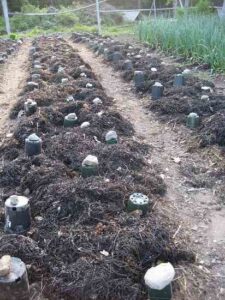
Cabbage, kale, broccoli and brussel sprouts will not do well in heat so it’s important to either wait for some wet weather or be very diligent with covering the plants and water them. I try to let nature do as much work as possible for me so if I see the right conditions coming up and the plants are big enough to take being dug out and moved, I tend to drop everything else and get to work. If the sunny days persists I do my transplanting in the evening and cover the plants with pots until they are established.
I plant my brassica seeds in tight rows and when it’s time to dig them out I first thin out all plants that are too small and then water the plants pretty heavily so the soil stick together better around the roots. Never expose dug plants to sunshine or drying winds, not even for a few minutes! I usually dig out 20 or so plants, use a tray to carry them to where I’ll plant them next, dig a small hole with a trowel (a mason trowel works great), put the plant in, fill in with a handful of compost and push the dirt back around the plant. I form the soil so the plant sits in a small depression that will catch rainwater.
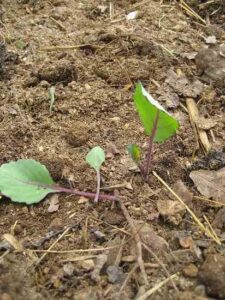
Brassica grows new leaves from the center so I plant them deep enough that the stem is buried all the way to where the new growth shoots out without covering that part. I snip off most of the bigger leaves, to give the plant less tissue to keep alive. For all plants I can think off – vegetables, trees, shrubs and flowers alike – the general protocol is to encourage strong roots before any top growth. While it might seem like it’ll set the plant back to trim off leaves, the plant will establish roots faster and catch up in size quicker.
Most Brassica I space 22-24 inches apart and when the transplanting is done I mulch the entire bed to keep the moisture in the ground and the weeds down. I use seaweed but anything that covers the soil will do.
Lettuce
Lettuce can either be started in succession, with a row or a few rows planted every few weeks but I’ve found that for me it works better to transplant, through which I achieve both the right spacing and a form of succession, since the transplanted plants will be slightly set back compared to the once left in place. I plant a number of rows in early spring when it’s likely to be damp and not much for bugs and when the plants start to get crowded I thin them out by pulling some and carefully digging others until I have about 6-8 inches between each of the plants. I cut all the leaves off the ones I dig out, once again to let the root get established.
Tomatoes
The desired weather to transplant tomatoes is very different from what I look for with most other crops. Tomatoes is a warm weather crop and does not like it cold or wet. My general guideline is to plant when the 10 day forecast shows little to no rain and a low temperature that stays in the 50’s. This can be tricky, because at the end of May when this weather is first likely to appear, the tomatoes might be pretty big in their pots and starting to show symptoms of stress. Tall “leggy” plants with flower buds, yellowing leaves and brown spots are all signs that the roots need more room than my 3 inch x 3 inch pots allow for. If I had around 10 plants and the cold weather persisted, I’d transplant them to bigger pots. At this stage, I usually care for about 50 plants, some for me and some for others, and they already take all the room we have in our house so I can only cross my fingers and keep checking the forecast.
I rather transplant my tomatoes at the beginning of a dry and hot stretch and water by hand than waiting for rain to relieve me from the work. Cool weather is OK, but tomatoes does not like wet feet. Nor wet leaves, since many common tomato diseases, such as early blight, starts with plants unable to dry out. I bury the plant to its neck – the second leaf stem from the top – and give them plenty of compost or seaweed to grow in. The entire stem that’s buried under ground will form a root and strong roots will give strong plants. I snip off all flower buds until solstice and while I perhaps have to wait a few days longer to eat the first fruit, I’ll get that back many times over by having strong, robust and well rooted plants that will be resilient to disease and produce for a long time into fall.
All MOTHER EARTH NEWS community bloggers have agreed to follow our Blogging Best Practices, and they are responsible for the accuracy of their posts. To learn more about the author of this post, click on the byline link at the top of the page.





