

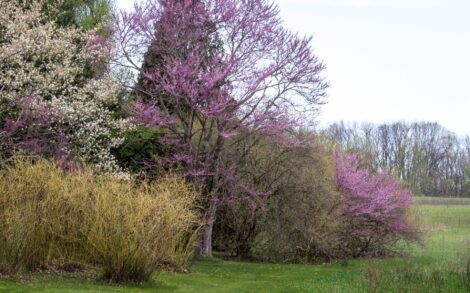
Plant small trees, shrubs, and native shade perennials to create layers of understory vegetation, promoting layered growth.
Start by researching your local native and invasive species. I’ll share some techniques and species that have worked well for my partially wooded 1-acre property. After moving to the property and fencing against deer, I surveyed the wooded part of the property. It consisted mostly of large oaks, maples, elms, and tulip poplars – a collection of large trees without any understory or ground cover. Shade varied from light to heavy. I wanted to rehabilitate the woods to create the feeling of a true forest that both I and the local wildlife could enjoy. So, I did some research.
In general, I wanted to create layers of understory: small trees, shrubs, and perennials. My first consideration was the degree of shade the plant could tolerate for good growth. For example, American plum can grow in substantial shade, but this will impact the amount of fruit the tree will produce. Other plants may become leggy or have less-vibrant fall color.
For understory trees, I’ve planted American hornbeam, sugar maple, and eastern redbud. All of these trees are shade-tolerant and have the potential to fulfill the niche of larger understory trees. I also have some beech trees on the property, and I’m allowing them to reseed since they’re shade-tolerant. By adding these plants and others, I’m hoping to establish a core of trees that can naturally reproduce in the area over time and therefore increase the diversity of plants on my property.
A number of shrubs do well in shade, and they all add their own interesting features. I’ve added black chokeberry, American hazelnut, and witch hazel. I had some spicebush on the property already, and even though it’s considered deer-resistant, my deer population didn’t seem to have a problem eating it. Now that I’ve installed fencing to deter the deer, the spicebush has reappeared vigorously. For areas with a bit more sun, I’ve planted American plum, serviceberry, and elderberry. All of these plants will tolerate shade but will produce more fruit with added sunlight.
The forest floor offers a unique habitat, and I especially like to grow perennials and ephemerals, which emerge early in the season to make use of available light before leaves appear on the trees. This includes Virginia bluebells, wild columbine, and mayapple. By the middle of summer, these plants finish their life cycles or go dormant.
Finally, the classic plant for shade is the fern. My property already had some ferns growing, and I’ve added a number of new ferns that I was able to purchase from a nearby native-plant nursery.
Unfortunately, planting natives doesn’t do much good if they’re crowded out by shade-loving invasives. So, I’ve also needed to be diligent about eliminating these unwelcome visitors. On my property, the top offenders are mustard garlic and bayberry.
As my woodland grows, I’m surprised from time to time to find plants that spring up by themselves. Every visit to the woods is an experience of discovery and connection to the plants and wildlife that call it home.
Originally published in the August/September 2025 issue of MOTHER EARTH NEWS and regularly vetted for accuracy.





