

A longtime energy and resilience expert offers advice on how to build a homestead that’s resilient.
The only certainty about the future is that we can’t predict it. We don’t know when there will be another major storm, earthquake, drought, or terrorist event. With the effects of a changing climate becoming more apparent, interest in resilience is growing rapidly — particularly in coastal areas that will be affected most by sea level changes and storm surges. Homesteaders who value independence and self-sufficiency are making their homes and properties more resilient. So what is resilience? The Resilient Design Institute defines resilience as “the capacity to adapt to changing conditions and to maintain or regain functionality and vitality in the face of stress or disturbance.” In part, this means that resilience is about being prepared for climate change, though the goal of resilience should appeal even to those who don’t share that growing concern. Resilience is about keeping your family safe and secure, no matter what happens.
Flood Resilience
When you’re working toward a resilient homestead, the placement of buildings and gardens relative to flood risk should be a major consideration. My wife and I purchased our farm in southern Vermont shortly after Hurricane Irene wreaked havoc on buildings, infrastructure, and farmland throughout the state. The property we found has about 10 acres of agricultural fields, all perched more than 150 feet above the West River. In an extreme rainfall event, we will get some soggy areas, but our sandy soil should do far better than the river-bottom land that was so affected by Irene.
To achieve flood resilience, we trenched on the uphill side of an old outbuilding that we’d just restored against a hillside. This trench captures moisture coming downhill during an intense storm or spring runoff when the ground is still frozen. Free-draining stone and drainage tile below should keep the building dry. We also put in similar drainage on our 1812 barn, which had suffered moisture damage in the past.
To assess your risk of flooding, get hold of Federal Emergency Management Agency (FEMA) flood maps for your area. I recommend going further than just avoiding the 100-year flood zones; also avoid the 500-year flood zones. Be aware that in some areas, the FEMA flood maps are out of date, or they don’t account for smaller streams and rivers that could flood in an extreme event. To protect against flood damage, keep mechanical and electrical equipment out of basements and even above the first floor in flood-prone regions. This is good practice even in areas where flooding is very rare. By building a super-efficient home, you can minimize the need for mechanical heating and cooling equipment and often put in much smaller systems than are common in most homes.
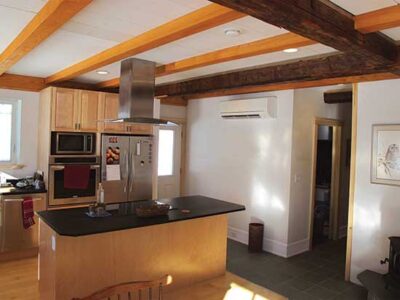
Our home heating system is an air-source heat pump (often called a “mini-split”). The indoor unit is mounted high on a first-floor wall, while the outside unit is mounted on the south side of our house, well above the ground on blocks.
Wind Resilience
With scientists predicting more intense storms with climate change, almost any new building should be designed and built with state-of-the-art measures for storm resistance. This could include a particularly robust structural frame, use of hurricane strapping and various tie-down strapping, installation of wind-rated shingles or metal roofing, and impact-resistant windows or exterior storm shutters. Wind resilience also means paying attention to surrounding trees that could fall on a building in a heavy wind. Consider removing high-risk trees or branches.
A specialized aspect of wind resilience has to do with tornadoes. It isn’t reasonable to design homes to withstand tornadoes, during which winds can exceed 250 miles an hour. But for homes in FEMA Wind Zone IV (the so-called Tornado Alley that covers much of the Midwest), at least incorporating a reinforced safe room to provide emergency shelter makes sense.
Passive Survivability
A key tenet of resilience is that the home should function reasonably well during a power outage. Passive survivability is defined by the Resilient Design Institute as “ensuring that livable conditions will be maintained in a building in the event of an extended power outage or interruption of heating fuel.” It’s achieved via superb energy design:
- A super-insulated building, including high levels of insulation; triple-glazed, low-E windows; and airtight construction.
- Passive solar design, including orientation that puts more of the windows on the south side, careful glass selection to allow high solar gain for south windows, and thermal mass inside the insulated building envelope to store solar heat.
- Passive cooling measures, including shade trees or vines to keep out the summer sun; overhangs above windows; careful glazing selection, particularly on the east- and west-facing windows to limit solar gain; and design for natural ventilation.
At our own resilient homestead, Leonard Farm, we did a major renovation of the 200-year-old farmhouse, creating 1-foot-thick walls and adding a new roof with 16-inch-deep rafters. For our walls, we framed in with 2-by-3s to create a 7-inch cavity, which we filled with spray-fiberglass insulation, and we added a 6-inch layer of cork insulation to the exterior. We installed double-hung windows to complement the historic house (double-glazed with a high-solar-heat-gain, low-E coating and argon gas fill), but then added low-E storm windows on the outside of the prime windows — so we effectively have triple glazing with two low-E coatings. Our 1,500-square-foot home is so well-insulated that we heat it with a single 18,000-Btu-per-hour air-source heat pump. Even in freezing temperatures, that heat pump keeps the house warm. Though we almost never need to air-condition the house, the air-source heat pump has that capability.
Supplemental Heat
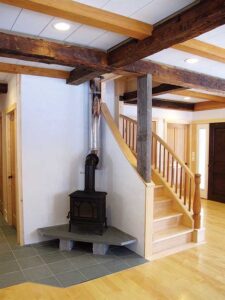
In cold climates, one should have a means to provide supplemental heat during an extended power outage. In rural areas, a clean-burning woodstove is ideal. In our house, we have one of the smallest Jøtul woodstoves on the market, and we use it very rarely.
Most other heating systems depend on electricity to function, so unless you have a backup source of electricity, those systems can’t be called resilient. At our old place, we had a pellet stove in an apartment above our garage, and I bought a kit that allowed me to operate the two fans in it using an automotive-type 12-volt battery if we experienced a power outage.
Some gas wall heaters, including systems made by Empire can function sans electricity, but these tend to be lower-efficiency models. I recommend against unvented (vent-free) gas-fired heating equipment for health and safety reasons.
Backup Power
Being able to operate electrical equipment during a power outage is a huge convenience, and it can be a lifesaver. In addition to gas- and oil-fired heating systems that need electricity, virtually all lighting is electric, and for most homes in rural areas, electricity is required for water pumping. While gas stovetops can function without electricity, nearly all gas ovens require electricity for the glow-core.
You can provide conventional backup power with a gasoline, propane, or diesel generator, but these systems depend on fuel availability, and in a prolonged outage, fuel may run out.
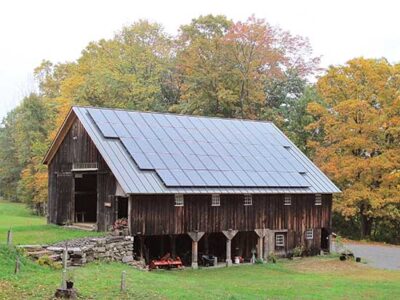
Solar-electric systems with battery backup offer the most resilient backup power option. For off-grid homesteads, batteries are almost always part of the system, but with grid-connected solar systems, incorporating a battery bank is very unusual. Partly, this is because a battery system is expensive and requires maintenance — and it just sits there 99.9 percent of the time. To add battery storage to a grid-connected solar system usually requires adding a separate inverter — as we would’ve had to do. We had wanted to put in a battery system, but the cost was just too high. We opted for a new type of inverter made by SMA (www.SMA-America.com) that allows us to disconnect from the electric grid during an outage and — during the day — use an outlet directly connected to the inverter. This setup doesn’t work at night, though, so it’s not a great option.
I’m hoping our new Chevrolet Volt can be used as a backup power source, but I haven’t been able to confirm that possibility. The first-generation Volts could function that way if you clipped an inverter to the 12-volt battery (not the high-voltage battery systems that power the motor). I think using a plug-in electric vehicle (EV) for backup power is the best option because those batteries aren’t sitting idle most of the time. I’d like to see plug-in EVs begin incorporating inverters directly into the vehicle to simplify this use.
Resilient Water Supply
In our area in rural Vermont, the biggest hardship for most homeowners during a power outage is access to water. Because we aren’t on a municipal water supply, we depend on our own drilled wells and submersible pumps. We developed a spring above our house that runs all the time except during severe droughts. We also plan to install a hand pump on our well. Today’s state-of-the-art, high-performance hand pumps rely on the same principle as the sucker rod pumps our grandparents used, but with precision-engineered components that eliminate the need for priming before use.
Hand pumps from Bison Pump and Simple Pump can push water from as deep as 300 feet, and they’re installed into the same well that houses the electric submersible pump. Weep holes are drilled into the pipe well below the frost depth, so water drains back into the well to this level.
Rainwater-harvesting systems can be another water-supply option. In this case, a high-efficiency filter plus ultraviolet or ozone treatment may be required to purify the water.
Related to the issue of access to water is the challenge of human waste. The best solution is a composting toilet that requires no water. Those with deep storage vessels tend to perform better with little maintenance — such as the products made by Advanced Composting Systems and Clivus Multrum.
Resilient Food Systems
Most Americans are dependent on food that’s shipped hundreds or even thousands of miles from where it’s grown to where it’s consumed. This food-supply system has a lot of vulnerabilities. A diesel-fuel shortage or extended trucking strike could interrupt food transportation. An extended drought could have a major impact on food availability and cost. And during natural disasters, grocery stores are often stripped bare from panic-buying.
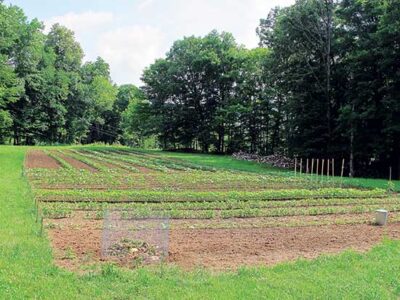
A more resilient food system is one built around local production. Growing your own food and supporting local farmers markets and community-supported agriculture programs (CSAs) brings food production closer to home and adds resilience.
Home food storage is also important relative to food security. I recommend keeping a six-week supply of food on-hand, comprised of nonperishable or long-shelf-life foods, such as dried beans, flour, whole grains, dehydrated fruits and vegetables, and canned fruits and vegetables.
At our home, we put up dozens of quarts of canned tomatoes, along with smaller jars of jam, pickled peppers, and beets. We also store fresh vegetables and fruits for months. We don’t have a root cellar, but we’re planning to build a CoolBot — a relatively new type of walk-in cooler that uses a specialized controller that allows an off-the-shelf window air conditioner to maintain temperatures close to 32 degrees.
Also consider how you could cook food during an extended outage. We have a woodstove with a top surface that we could cook on, as well as an outdoor grill. We also have a new type of thermo-electric outdoor cookstove made by BioLite with a small fan to aid in combustion. In fact, this wood cookstove even includes a USB port to charge cell phones while operating the stove.
Community Resilience
Resilience is about more than individual homes and homesteads; it’s about strong, tight-knit communities where neighbors who know each other are better able to respond to interruptions. There are many ways to build more resilient communities, but most start with getting to know your neighbors. Organize potluck dinners and other community gatherings. Figure out ways to work together on projects — whether farming or seasonal clean-up walks.
Resilient Transportation
When we considered where to create our resilient homestead, one of our key considerations was whether we could bicycle into Brattleboro — the nearest town with grocery stores and other services. My wife and I regularly bike the six miles into town to avoid using our cars, so it’s nice to know we could bike into town if we really needed to. The need for more sustainable — and more resilient — transportation argues for our getting involved in our local planning commissions and organizations that advocate for creating more pedestrian-friendly communities.
Putting It All Together
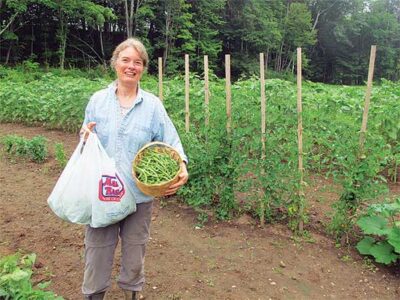
We’re lucky at Leonard Farm that we’ve been able to put a lot of pieces of the resilience puzzle together. Our resilient homestead can also serve as a hub for the 30 homes in the village next to us that aren’t as resilient. To me, the best thing about our emphasis on resilience is that it also helps the environment. We operate our house on a net-zero-energy basis, and by growing our own food organically, we’re improving the soil and sequestering carbon.
All this makes us feel great. We’re able to practice what we’ve long been preaching.
Alex Wilson is the founder of BuildingGreen, a leading provider of information on green building practices, and in 2012, he founded the Resilient Design Institute. He lives with his wife on Leonard Farm in Dummerston, Vermont.





