
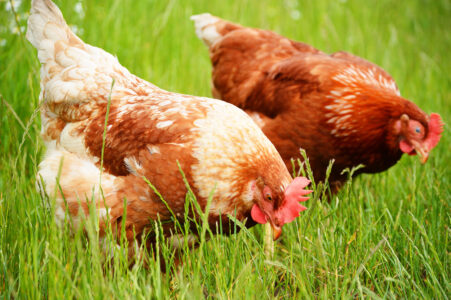
All of us know the taste and nutritional benefits of eggs from hens raised on pasture, but grass doesn’t grow year-round in most places in the United States. So, how can you preserve green feeds you grow in spring and summer so your chickens can enjoy “pasture” all winter long? Chickens love legume hay (alfalfa and clover, for example), but you can also make silage in small quantities for chicken feed. To make silage, simply chop and ferment plants in an anaerobic environment. You can make silage from all sorts of crops, or even from the grass clippings from your lawn.
Farmers use large equipment to make silage (usually from corn plants or alfalfa), which they store in silos. But you can make silage in small plastic bags. Hank Will, former editor of Grit magazine, gives these simple instructions for small scale silage production: “Mow grass, double bag the clippings (pack very tightly to exclude oxygen) and seal the bag. Anaerobic fermentation should produce lactic acid, under ideal conditions. You can use a plastic garbage can as the mold and dump the closed bags out on their tops (this helps further seal the bags). Avoid letting the grass wilt before packing it. When the grass is dry it’s harder to pack. Technically, this would be more like “haylage” because it’s chopped grass.”

Here are a few links to more information on making small amounts of silage:
Try Out Silage as Feed for Backyard Poultry Flocks
Some of the editors of Mother Earth News are planning to try making silage in bags to feed our chickens this winter. We’d like you to try it, too, so we can all learn from each others’ experiences. Please make some silage/haylage from grass clippings or other fodder crops this summer, feed it after the growing season ends, and then report what you’ve learned in the comments section below.






