

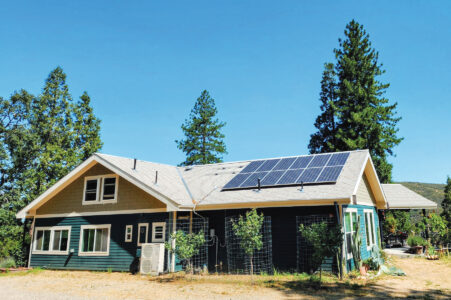
Adapt to the natural rhythm of solar abundance and scarcity while living off-grid in California. Learn to live by the sun when doing household tasks and discover the benefits of fire-based cooking.
Ari and I live off-grid in the Sierra Nevada foothills of California. With rising energy costs, rolling brownouts, water restrictions, and unpredictable outages for so many people, it feels almost surreal that we now live free from power or water bills. But our path here wasn’t our original goal – it unfolded out of necessity. Once off-grid life got underway, we quickly realized our lasting comfort and sustainability would depend on our ability to live in sync with the seasons.
This way of life has deepened our relationship with the land and made us more mindful of every resource we use. Over time, we’ve developed systems and habits that respond to the natural cycles of seasons, light, and temperature. By sharing what we’ve learned firsthand, we hope to offer insight into how seasonal awareness can reshape not only how we create and consume energy, but also how we live.
Why We Went Off-Grid
Ari built our 2,800-square-foot home under an owner-builder permit in 2017 – his first major project, and a powerful learning experience. The 20-acre property, located in El Dorado County, California, at a 2,000-foot elevation in Zone 8b, held promise but had little infrastructure. It came with a dilapidated 200-square-foot cabin, no electricity, and a 25-gallon-per-minute well powered by an old, exhaust-heavy generator.
Initially, we assumed connecting to the grid would be straightforward. But when a neighboring landowner declined to grant an easement, we discovered that bringing in power lines would cost over $50,000. On top of that, we’d be paying a fluctuating electricity bill of around $250 per month, plus a $40 per month interconnection fee – just to stay connected to a utility known for recurrent service interruptions and frequent rate hikes, especially in rural areas.
Through the lens of viewing the obstacle as the way forward, we asked ourselves: What do we truly want from this land – and from our lives? The answer was clear: independence.
How We Did the Math
To weigh our options, we created a 10-year cost comparison based on the warranty lifespan of most off-grid equipment.
Grid-Tied Option
- One-time hookup cost: $50,000 +
- Electricity: $250/month × 12 = $3,000/year
- Interconnection fee: $40/month × 12 = $480/year
- 10-year total = $84,800 +
Off-Grid Solar and Generator Option
- One-time system cost: $24,000
- Annual propane: $1,000
- Annual maintenance: $150
- 10-year total = $35,500
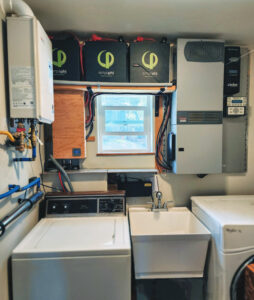
We chose to go fully off-grid, investing $24,000 in a complete solar system. To save money, Ari installed the system himself, including twelve 330-watt, roof-mounted solar panels, a 4,000-watt inverter, a lithium-ion home battery with the capacity to store 10 kilowatt-hours of energy, and an automatic backup generator with a two-wire start. The generator automatically kicks on when battery levels drop, and it shuts off when the batteries are fully charged. This setup reliably powers our home year-round, and it’s especially critical during winter and extended periods of low sunlight.
We spend about $1,000 per year on propane, and we save about $150 each year by cleaning the panels ourselves instead of hiring someone else to clean them. Most panels offer a 10-to-25 year manufacturing warranty, so we don’t have insurance on them.
Even accounting for fuel and upkeep, our off-grid system saves us nearly $50,000 over a decade – but, more importantly, it offers something far greater: energy independence, long-term resilience, and a lifestyle grounded in awareness rather than convenience.
Designing a Home for the Seasons
Living off-grid means learning to work with the sun, not against it. In our climate, we experience all four seasons – hot, dry summers that climb into the high 90s F, and cool, damp winters marked by long stretches of cloud coverage. These natural rhythms shape how we live and how we use energy. When the sun is abundant, we expand our energy use. When it’s scarce, we scale back. Our home lets us partner with the seasons.
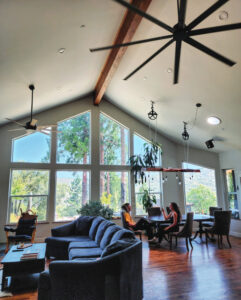
- Natural light and insulation. Skylights bring in daylight and reduce our need for artificial lighting. Insulation in the ceilings and walls keeps the house a comfortable temperature. We followed the golden rule: Never skimp on insulation. In summer, the house stays 10 to 15 degrees cooler than outside. In winter, it holds the warmth from our woodstove, maintaining 65 to 75 degrees indoors depending on conditions.
- Heating in winter. Our woodburning stove features a catalytic element that burns wood more efficiently, producing more heat with less fuel and fewer emissions. It’s our primary heat source – and our cookstove. We simmer broths, heat meals, and warm the space all in one.
- Passive heat redistribution. To extend warmth into the night, we added a loft exhaust fan that pulls heat down into the main bedroom. A common issue with woodstoves is uneven heating – some rooms overheat while others stay cold. This simple fan helps redistribute warmth throughout the home, reducing the need for supplemental heating. It’s a small upgrade that makes a big difference.
- Cooling in summer. When day temperatures climb into the upper 90s, we rely entirely on passive cooling. As the sun sets, we open windows throughout the house to let heat escape and draw in the evening breeze. The loft traps heat during the day, so releasing it at sunset allows warm air to rise and exit naturally. In the early morning, we close the windows to preserve the cool air. During sun hours, ceiling fans circulate air to maintain comfort – no air conditioning needed.
Living in Solar Rhythm
Solar orientation. Our south-facing roof maximizes winter sun exposure and consistent energy generation throughout the year.
- Timing energy loads. Solar living means using energy wisely. High-demand tasks, such as laundry, dehydrating, or crockpot cooking, happen during sunny hours. Evenings are lighter – we use the propane oven and avoid draining the batteries. We turn off unused lights and use LED bulbs. Even small habits – such as playing YouTube audio with the screen off – add up.
- Backup power for winter. During the darker winter months, when solar alone isn’t enough, our propane generator steps in to top off the batteries in low-light conditions (Ari likes to joke we’re “burning dinosaur bones,” his way of reminding us that propane is a precious natural resource to be used with care.)We balance its use with fire-based cooking and thoughtful energy habits. For example, we time a 10-loaf sourdough bake-off while the oven’s already hot, then freeze the extras for the weeks ahead.
Solar-Powered Water System
- Our well setup. Conventional well pumps require a lot of electricity – most run on 240 volts. We opted for a direct current (DC) solar pump instead. They’re more expensive upfront, but highly efficient. When the sun is shining, it pumps 4 gallons per minute – 240 gallons per hour – up 800 feet to a 2,500-gallon gravity-fed tank. A pressure switch and float valve automate the well pump system. Like a toilet tank, the pump shuts off when the tank is full, running only when the sun shines. On a sunny day, the tank can fill in eight hours on solar. The well pump runs in the morning to top off the tank from the previous day’s consumption.
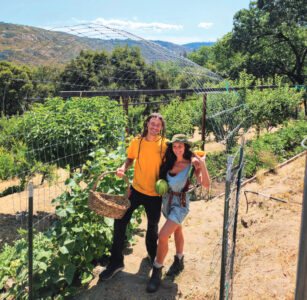
- Smart water management. Our extensive, gravity-fed irrigation system draws from the water tank and spans multiple zones, using efficient drip lines to deliver water directly to the roots of fruit trees, perennials, and seasonal crops – minimizing waste and eliminating the need for electric pumps. From this, we plant successive crops and grow food year-round.
- Moisture recycling. In winter, we dry clothes indoors, reintroducing moisture to counteract the dry air from the woodstove.
Living by the Sun
Living off-grid through the seasons isn’t just about solar panels and backup generators – it’s about paying attention to the weather, to what’s available, and to how we use what we have. We’ve had to adjust our routines, rethink convenience, and get comfortable with planning ahead.
It’s not always easy, and it’s not for everyone. It takes a lot of fortitude, hard work, and dedication. But through the effort, we’ve found resilience, creativity, and a deeper connection to the world around us. Whether you’re already off-grid, working toward it, or simply curious about living more intentionally, there’s value in learning to move with the natural rhythm of the seasons. The reward is a life that feels grounded, self-reliant, and deeply real.
And, yes, it is a lot of work. As Ari always says, “Dreams only work if you do.”
Monique Wildbloom lives sustainably off-grid in Northern California. Curious about off-grid living or need help planning your own solar system? Contact us at AlpenGlow.OffGrid@Gmail.com for consultations or questions.





