

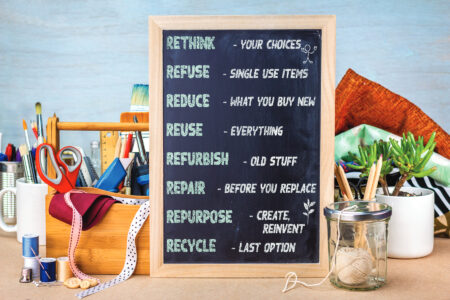
Learn 15 ways how to escape consumerism by reducing what you buy, repairing what you have, and reusing or repurposing what you’ve got.
I’m what some people would call an “old-time New Englander,” which is a polite way of saying I’m “cheap” (though we prefer to say we’re “thrifty”). As thrifty as I am, I’m nothing compared to my parents. Both my mother and father were children of the 1920s and ’30s. This means they grew up with very little, and thus, they never wasted a thing. “Waste not” is a value I grew up with and one I live by today.
The state of our environment and what we can do about it are important to me. I’ve come to realize that we can’t wait for the government or the corporate world to do what’s right. If we want to make changes and save money, we need to take action ourselves. This article is about some of the things that my family and I try to do to make our world a better place, while acknowledging there’s much more than “recycle” in the cycle.
How to Escape Consumerism
The first step in altering your impact is to actively pay attention to what you purchase. Take the time to do a true inventory of where and how you spend your money. An honest purchase audit is essential for understanding your position before taking any other step.
Some items may worth the extra cost. In my household, we buy aluminum foil made from recycled aluminum, paper products made from post-consumer paper, and unbleached coffee filters. Yes, they cost a little more, but taking this step helps the environment.
We always question whether we actually need the new item, and often, we don’t. It makes a difference when you stop and consider the true need.
Reduce
All of us generate trash – some more, some less – and that trash has to go somewhere, usually to a landfill. While recycling everything we can is great, to a degree (see “Recycling Is Broken,” October/November 2024), reducing what we waste is even better. This may mean truly taking a “trash audit” and creating a plan that you stick to. Are you buying a lot of plastic-wrapped or encapsulated products? Those can’t be recycled. Are you throwing out all glass? Most glass can be reused. Make a list as you audit yourself; you’ll be able to create a plan for your home. Over time, you can significantly reduce your trash.
Cloth. How many paper towels do we collectively use in the course of the day? I can’t even fathom the number, but it’s a lot. How many trees are cut down for those paper towels? Now consider how many trees would be saved if we just used cloth towels to clean up those spills. How much money would you save if you didn’t have to purchase paper towels? There are plenty of alternatives – Swedish dish towels (one small square towel replaces 17 rolls of paper towels, and these towels are compostable at the end of use); reused old towels, T-shirts, and ripped sheets broken down into rag-sized pieces etc.
Paper. Yes, I’ll admit, I print my articles after each rewrite. With the sheer volume of pieces I write, that’s a lot of paper. Even though I use unbleached, post-consumer paper, I take it one step further by using both sides of the paper. That cuts the amount of paper I use by half. This adds up to some substantial savings over time.
You can save even more paper by making things from it: Shred it and use it for papier-mâché or as shipping filler in boxes; fold it into unique envelopes, wrapping, or pencil holders; use shredded paper to absorb spilled liquids; and if you use nontoxic ink, you can even compost your shredded papers.
Single-use plastics. This is the scourge of the environmental world, and rightfully so. This material will never break down in our lifetimes. While plastic bottles are the first thing that may come to mind, we also need to consider plastic food wrap, sandwich bags, and grocery bags.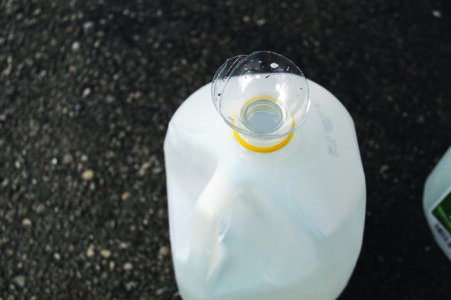
There are environmentally friendly replacements that will also save you money in the long run. Both plastic wrap and sandwich bags can be replaced with cloth soaked with beeswax. These cloths come in all sizes, form to any dish, and are washable. These beeswax wraps may seem costly at first, but once you consider the cost of plastic alternatives, you’ll appreciate the actual savings over time. You can also make your own beeswax wraps. Or, try making a cloth bentō bag to replace all those sandwich bags.
Food waste. Believe it or not, we as a nation throw away more food than anything else – some studies suggest that we toss nearly 60 million tons per year; that’s approximately 40 percent of the food supply.
The simplest way to reduce food waste is to purchase and cook only what you need. You can also buy produce that isn’t “perfect” or is close to the end of its shelf life and freeze it for future meals.
Those vegetable scraps can go one step further: Save them to boil down into vegetable broth for cooking or canning, then toss the spent scraps in the compost. You’ll save yourself some money the next time you make your favorite soup and you’ll build some nice soil for the garden; a win-win by all rights.
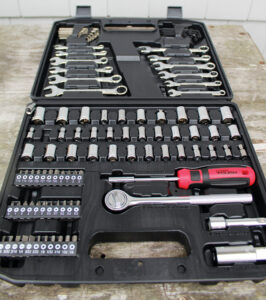
Reduce petroleum-based yard products. Think about the cost of maintaining that lush, green lawn. How much do you spend on commercial petroleum-based pesticides and fertilizers? How much extra is the water bill associated with all that non-native green? Now, add the fuel used to mow it. How much could you save if you did away with that lawn and instead planted native plants? Less work, less money spent, less damage to the ecosystem, and just as lovely (and maybe even edible if you plant the right ones).
Repair
I remember growing up in a world where items were meant to last, and if they did break, you could fix them. Every appliance, tool, and machine came with a manual that told you what parts you needed and how to obtain them. Not anymore. Today, you can’t work on your own vehicle, tractor, or tiller without a computer degree, specialty tools, and a wallet full of money. The manufacturers don’t want you to fix items. They want you to spend money. Despite that, there are some things you can fix, whether they want you to or not.
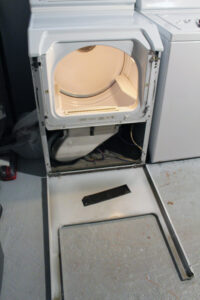
Clothes dryer. We’ve had our dryer for over 20 years, and when it stopped working, I armed myself with a wrench, a screwdriver, a flashlight, and a multimeter and went to work. I had no manual or anything else to go by. Through trial and error, I identified a couple of connectors that weren’t receiving power and appeared to be the root of my issues. Nobody sold them, so I had to use the numbers on the bad parts and then purchase them online. A day and $30 later, I had everything back together. It beats paying $500 for a new machine. The good news is that the dryer works like the day I bought it.
Generator. I’ve had my generator for over 30 years. I’ve always kept up with the maintenance and never had an issue. Then I did. I couldn’t figure out what was wrong. Every shop in the area tried to sell me a new generator. They told me it’d cost more than it was worth to fix it. I ordered the parts I thought I might need, and then I called a friend who knows everything about small engines. After two days, the generator was back to running like new.

Wheelbarrow and tool handles. I went to use my wheelbarrow, only to find that one of the handles had started to rot. I made a trip to one of the big-box stores, but new handles cost as much as a new wheelbarrow. I didn’t need a new wheelbarrow, only the handles.
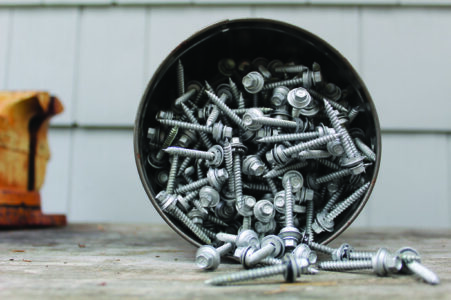
I went home and found two 2x4s of the right size and “new” hardware from my coffee can of assorted nuts, bolts, and washers. Using my drawknife, I shaped the handles using the old handle as a template. After drilling a few holes, I proceeded to put everything back together. The total cost was just my time.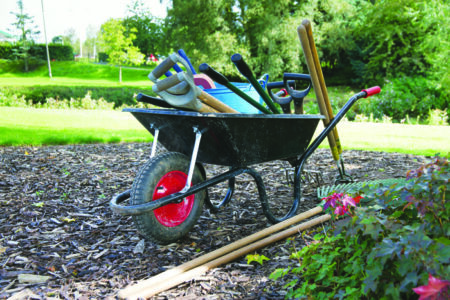
It doesn’t stop at wheelbarrow handles. Replacing wooden handles on most anything is achievable with a little patience.
Reuse
Everything has more than one life. Sometimes, you just need to use your imagination.
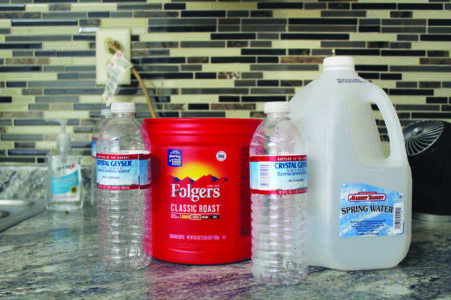
Single-use bottles. They’re everywhere, so we might as well reuse them. I cut the tops off and use them as funnels, and use the bottoms to start my vegetable seeds. Liter bottles can be used to protect tender plants until they take hold.
Options to reuse plastic bottles don’t stop there. If you’ve got kids in your life, there are crafty ideas all over the web for little projects that use drink bottles that range from décor to school supplies.
Other types of single-use bottles have plenty of reuse too: Lotion bottles can be cut, cleaned, and used as faucet extenders for little hands; milk jugs can easily transition into watering cans; laundry detergent bottles can be cleaned, cut, and used to store and dispense yarn; and condiment bottles can be refilled and reused.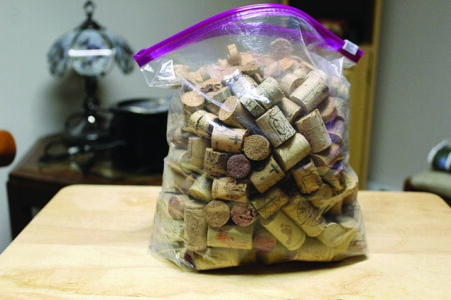
Coffee cans. I keep one of these on my kitchen counter to collect food scraps before finally dumping them on the compost pile. I also use them to hold various hardware in my workshop. Other ideas to reuse these containers include making bird houses, cubbies for storage areas, and all sorts of crafts and seasonal décor.
Wine corks. I don’t drink wine, but many of my friends do. They recycle the bottles but throw away the corks. I ask them to save the corks for me, and then I glue the corks together and make trivets and coasters out of them.
Other ideas for corks include gluing them sideways into a frame, cutting the excess, and using it as corkboard in your home; slicing them into rounds for furniture or cabinet stoppers; or using them to create a bath mat.
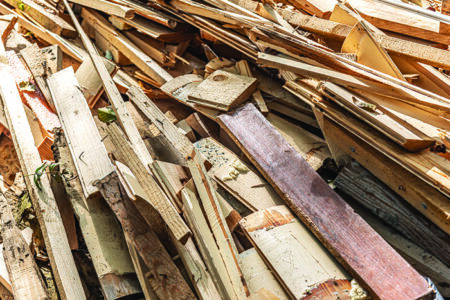
Pallets and scrap wood. The cost of lumber is high and about to get higher. Have you ever wondered what happens to all the scrap lumber from construction sites? Most of it ends up in a dumpster. With permission, I salvage that lumber and turn it into chairs, tables, and building material for sheds. Usually, all you need to do is ask.
I see people throw away wood pallets every day, never considering the value. Pallets can be used for a variety of jobs, such as the walls of a compost bin, the floor of a shed, or even as décor or new cabinets or shelves – one Mother Earth News editor used pallet boards on the lower half of her living room and hallway walls to prevent damage and, I quote, “because it looks real cute.” I salvage the wood from pallets to make things for around the home.
Sometimes, you just need a small board to fix something. I give wood that I can’t salvage to friends to use in their woodstoves (as long as it’s untreated).
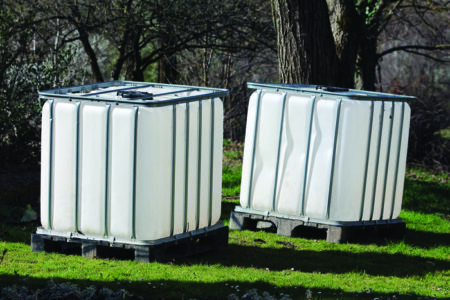
Food-grade plastic barrels and buckets. These are the barrels and buckets used to deliver food to restaurants. I secured, with permission, one of these barrels and, with a few modifications, made it into a water-catchment container for my home. There are all sorts of uses for these containers – from water storage to furniture to biodigesters – and you just need imagination and a few tools to give these large waste products new life.
Wrapping Up
These are just a few ways that we all can consume less and save money in the process. I’m sure you can think of a few more. If we all did just a few of these things, we could keep more trash from the landfill and extend the lives of items we already have.
Dana Benner has been writing about all aspects of the outdoors, self-sufficiency, and the environment for over 35 years. His written work appears in numerous publications, including Grit, Mother Earth News, Countryside & Small Stock Journal, and others. He also hosts and produces outdoors-related programs on HCTV in Hudson, New Hampshire.
Originally published in the December 2025/January 2026 issue of MOTHER EARTH NEWS magazine and regularly vetted for accuracy.





