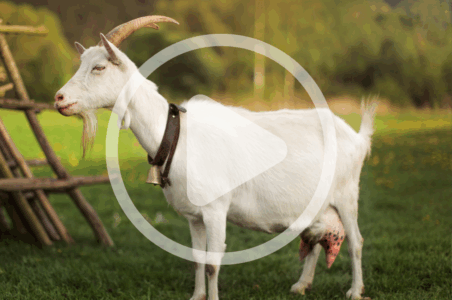
The Useful Goat
Josh Wilder: What are some of the unique benefits that goat dairy might appeal to folks on a health conscious level?
Gianaclis Caldwell: That’s a question that there’s a lot of misinformation about because goat dairy, it has some significant differences, but they’re also in some ways insignificant.
When it comes down to it, except for the fact that most goat milk that you can access either from your own farm or from a neighbor, is probably going to be small scale. You’re probably not gonna be buying grocery goat milk from the grocery store that’s from a huge farm. There are some of those, but there are very few compared to cow, and that, in and of itself makes that milk better.
One thing I always tell people and my students and cheese making classes and such is that milk was never meant to see the light of day. No milk from any mammal is meant to be stored and preserved and trucked all over the [00:01:00] country. And, sitting on a shelf it just deteriorates. It doesn’t mean it’s unsafe, it just means it’s not as good as it could have been.
Josh Wilder: Welcome to the Mother Earth News and Friends podcast. At Mother Earth News for 50 years and counting, we’ve been dedicated to conserving the planet’s natural resources while helping you conserve your financial resources in this podcast. We host conversations with experts in the fields of sustainability, homesteading, natural health, and more to share all about how you can live well wherever you are in a way that values both people and our Mother Earth.
Hello, thank you for joining me for this episode of Mother Earth News and Friends. I’m Josh Wilder, content director for Mother Earth News. And with me today I have Gianaclis Caldwell of Pholia Farm, and author of many books including her newest, the Useful Goat, the Ultimate Guide for Milk, Meat, Fiber, Hides, and More.
Thanks for being here, Gianaclis
Gianaclis Caldwell: Thanks for having me, Josh. [00:02:00] It’s good to see you again.
Josh Wilder: Absolutely. You’ve been in the goat game for quite a while and so what inspired you to write a book that emphasizes nose to tail approach to goat keeping beyond just dairy products?
Gianaclis Caldwell: Yeah, funny enough when I started writing Holistic Goat Care, which is my goat health book it was supposed to be called The Complete Goat and it was going to be nose to tail. And that was mid 2010s that I got that book going. And so I had all this content and about about this time last year, I suddenly realized I have got content that’s just sitting around, and I’d delightfully thought I could just, oh, put those files into one document, freshen it up a little bit and put it out there, because I’d done a ton of work. It was about a quarter of the book that got cut and it got cut because it was gonna be too big. And, of course everything costs money and printing a big book that size would make [00:03:00] its cover price very high.
And it’s a, Chelsea Green books are high quality with good paper printed in the states, so they cost a little bit more to begin with which I’m all for those reasons. But we didn’t wanna put it out of the price point of most folks, so it got cut. And so I wanted to use that.
And then I started digging into it and thinking, ah, that’s so old. Oh, I know more now. Oh, so I ended up having to do quite a bit of work on it and learn some more things in the process, which is one of the things I love most about writing both nonfiction and the fiction I’m doing now.
There’s always research to be done. There’s always something to learn. So it’s a lot of fun. Yeah. So I just thought there’s a lot of stuff that I know would’ve helped me to have there. Obviously nowadays there’s tons of content available, videos and that sort of thing, but there’s also tons of misinformation spread in all of that, or, it’s not purposeful, it’s just from not quite [00:04:00] understanding fully what the science-y kind of concepts behind things are like the hide tanning. So it wasn’t until I started doing the research and then putting it together for this book that things started to click for me and I thought, oh, this is why you don’t need to buy kits for almost everything, anything, because there’s just some basic stuff going on that, that you can parse together or, cobble together in a more affordable way.
Yeah, so it was fun.
Goat Hide Tanning For Beginners
Josh Wilder: For sure. Yeah. And you mentioned hide tanning. Yeah. For a beginner looking to process their first goat hide what would you say is the most important piece of advice if you had to give just one single piece?
Gianaclis Caldwell: Definitely taking your time. And on that note, to take your time, you need to have everything organized ahead of time . There are three approaches. So know that upfront before you even get started, and then know it’s gonna take you a [00:05:00] lot longer. All these things do when you first get going and allow for some mistakes too.
It’s not gonna be your most perfect job ever. But what is? So you just gotta dig in and get going. And if you have access to somebody who’s butchering hot animals and can get a hide that way, or if you are butchering your own, why waste it? Most of the time all these things get wasted nowadays.
Josh Wilder: Yeah. And in the interest of reducing waste, what are some of the more practical or unexpected uses for hides that you people might not have considered?
Gianaclis Caldwell: If you’re working with leather, you probably have considered all these things ’cause you’re looking for things to do with it.
I found the trouble with tanning, the goat hides “trouble” in quotes is it’s so beautiful with the hair on it that you don’t want to remove the hair to make leather. But it’s where in leather that you have the most versatility for doing craft projects and sewing it. [00:06:00] Goat hides are so soft and supple.
They’re fairly easy to sew on a home sewing machine or by hand, unlike cow leather. But you do have to remove the beautiful hair to do that. So I ended up, almost all leaving hair on all the time. And then you just end up like you mentioned with throws and rugs and things like that, you can make some projects with the hair on, but goat hide hair tends to want to fall off with a lot of friction. So it isn’t as durable as some hides in that regard.
Processing Meat Goats for Beginners
Josh Wilder: Now you mentioned butchers. Now let’s say you have a homesteader that has the infrastructure to try approaching processing meat goats. What steps might they take to, build confidence and have respect for the animal.
Gianaclis Caldwell: If there’s any way to go be with somebody who’s already doing that to walk you through it, because it is a lot. The [00:07:00] first time I did it on our farm, and I’m a vegetarian, mind you, I don’t eat meat. But I think it is a natural thing and here we are with this farm or we had the farm and we’re making animals, and the rest of my family is eating animals. And so anyway, I did do it myself, but I knew enough to how to do it and I already fully respected the animal. So finding somebody who does it with reverence that can walk you through it. Or hopefully my little book will help, build that confidence hold your hand as you take a life, because that’s what you’re doing. Yeah. So I still, I cry so easily. Yeah. But and then the same with the hide tanning. Allow yourself a lot of time for, beyond the killing stage, that’s quick and that could be extremely humane done at home. And nowhere near approaching what animals are put through for even the [00:08:00] most kind commercial slaughter. But then the butcher, which is the breaking down of the animal and the high and the body parts, it’s messy or it can be messy, and it’s a lot to go through. But yeah, so allowing plenty of time, picking a time of year when you’re not gonna be challenged by yellow jackets and heat contributing to the pressure to get it done quickly. So typically fall is a good time for that.
Common Mistakes When Processing Meat Goats
Josh Wilder: And so once you have the process meat what are some mistakes that people commonly make when they’re cooking with it? Are there any recipes you have to avoid those mistakes?
Gianaclis Caldwell: Goat meat , it’s not unlike goat cheese a few decades ago, or even a decade ago, of people assuming it’s one thing, and in that, in the case of cheese, something with a really gamey flavor, and now we’re finding out as those of us who’ve had goats [00:09:00] know it doesn’t have to be that way. And goat meat on the same token is most of the goat meat sold and served is from animals that have been harvested when they’re afraid. And we all know the effect that has on beef it, it damages the muscle tissue or sets it up for being tough or dry, depending on what the problem was for the animal.
So because a lot of the goat meats sold in the world, the majority of it is from these feral goats that have been, just rounded up and mostly in Australia. And it’s a great use for that. That population because they’re damaging to the environment and they can’t seem to get rid of ’em. So they treat ’em as a crop, which is great, but it makes for tough meat and all often gaming meat.
You don’t want to have to deal with that at home. You want high quality meat. So the best way to do that is to have the animal calm. The meat can [00:10:00] still sometimes be on the tougher side simply because it is low in fat. So you don’t have the marbling, the intermuscular fat deposits that beef can get and that can lead to toughness. And then also beef is almost always hung to age. And in that phase the protein muscle starts to break down a little bit so it tenderizes so they can hang beef for quite a while and age it because of the leanness of goat you can’t do that. And it’s also not very economical to hang these tiny carcasses in most facilities.
So the approach that has been I found extremely successful, at least for our farm, was brining it. In a very simple brine without any seasoning, and that is basically like wet aging. So you’ve got the meat in where it’s not gonna dry out, and it’s going to have a chance to start breaking down a [00:11:00] tiny bit and relax, but it’s safe because of the salt.
And it’s cold. So brining works really great. Also if you are having your meat processed by somebody else and you can’t do that, simply turning most of it into ground goat works really great. So like ground beef only ground goat, because it, they can mix a certain amount of the goat’s fat in there.
And that will tenderize it. And then the process of, pulverizing, it is like chicken fried steak, that tenderizes it. So that’s a good way.
Josh Wilder: Great. Yeah, that sounds delicious.
Gianaclis Caldwell: Yeah. And then you use it any way you want, burgers or if you’ve brined it for grilling and all of that it doesn’t have to be cured, it doesn’t have to, have all these heavy spices, which is also delicious, I’ve been told. But those methods are for especially helpful when the goat is gonna be [00:12:00] tough.
Raising Goats for Sustainability
Josh Wilder: A lot of our audience are trying to build a more resilient and sustainable food system on a small scale. And raising goats for milk and meat could potentially contribute to that. Can you describe maybe how that contributes to that system?
Gianaclis Caldwell: If you’re going to have livestock as part of our, food systems they are the most sustainable because of their small size, their adaptability to multiple environments, their versatility with feedstuffs versus cattle, on the input of cattle. So it really is a wonderful thing to do.
The trouble is they’re so damn cute and personable that they win your hearts and it becomes very difficult to conceptualize of eating them on top of everything else. But you know what? I grew up with cattle. And they’re darn cute too. And they have definite personalities. So I think maybe [00:13:00] even little fish do.
So you can’t let that be the thing that stops you. But that, as far as it’s sustainability, really easy to do on small farms even tiny ones. It’s just a matter of some of the particulars of, harvesting meat for one thing in a setting where you might have neighbors either hearing the, if you use a pistol to, to do the kill, which is the most humane or a captive bolt that could be a difficult thing.
Or even people happening upon you doing the process. I know I always, even on our fairly private farm. I always made sure I was set aside in the back of the barn, somewhere where if the UPS driver came up and they happened to be with PETA or something.
But other than that, if you’re raising, already raising livestock, you already have a very potentially very sustainable food system on your tiny [00:14:00] farm.
Yogurt from Goat Milk
Josh Wilder: And from a dairy standpoint, a lot of folks like to get into cheese making and that’s might call a starter value added product to the milk, but beyond cheese. What’s a product that you think homesteaders should try making and why is that?
Gianaclis Caldwell: My go-to for dairy products, even almost before cheese is yogurt. , I still make yogurt even though we sold our farm last year, and I get milk to do it because it’s so easy and it’s such a versatile thing to eat. If you use probiotic culture and we use it in place of sour cream and anything really to add a smooth dairy kind of thing. I grew up, I ate tons of yogurt. We made it from our cow milk, and so I just love yogurt. The only thing Josh, about goats that is a negative, and I will confess to this, is the lack of their cream separating.
So you can’t make butter like we did with our cows when I was growing up. [00:15:00] You can, if you skim it slowly over time, but it’s a very different butter and it’s just not ready waiting for you the next day in your jar of milk in the refrigerator. But yogurt and any of those fresh products like that, that aren’t technically cheeses because they’re not drained, it’ s super simple, super forgiving in the make and versatile, and they last a long time too.
Josh Wilder: Yeah that’s key.
Gianaclis Caldwell: Yeah.
Goat Dairy Nutrition
Josh Wilder: And as far as nutrition goes, what are some of the unique benefits that goat dairy might appeal to folks on a health conscious level?
Gianaclis Caldwell: Yeah, that’s a question that there’s a lot of misinformation about because goat dairy, it has some significant differences, but they’re also in some ways insignificant.
When it comes down to it, except for the fact that most goat milk that you can access [00:16:00] either from your own farm or from a neighbor, is probably going to be small scale. You’re probably not gonna be buying grocery goat milk from the grocery store that’s from a huge farm. There are some of those, but there are very few compared to cow, and that, in and of itself makes that milk better.
One thing I always tell people and my students and cheese making classes and such is that milk was never meant to see the light of day. No milk from any mammal is meant to be stored and preserved and trucked all over the country. And, sitting on a shelf it just deteriorates. It doesn’t mean it’s unsafe, it just means it’s not as good as it could have been.
So when you have your own, it’s going to be fresher. But if you have a cow. That’s going to be true too, most likely. So goat milk though it’s real claim is it’s smaller milk fat globules that float within it and do not separate. So it has [00:17:00] that nice more homogenized feel to it. But those fat globules are smaller and the milk fat globulin membrane, the little membrane holding all the fatty acids inside of it is more delicate.
So it makes it more easy to digest it. So that can be helpful for people who have trouble processing cow milk. If they have a true allergy to cow milk proteins, some goat breeds do not have those same proteins, but many do. So you have to know what your real problem is with cow milk if you have one at all.
And then as far as lactose go, goes goat milk has almost the same amount of lactose. You hear people think and say that it doesn’t have lactose. But what it is if you have a true lactose intolerance, which is not an allergy of course, but an [00:18:00] intolerance, it means you lack the enzyme to break down that fat cow milk. So if you have trouble with cow milk for the lactose, you don’t have that enzyme. If you’re drinking raw milk, there are going to be bacteria in there, usually, hopefully lots of good ones that will produce that enzyme so it can help you in the digestion of it. So people that can handle goat milk that can’t handle cow milk, they may think it’s just the goat milk.
It’s more likely that it’s raw goat milk helping them with that digestion. You have to work it down to what’s your real problem with it and know that if you even have a problem like I said before, but that milk fat globule is still going to be easier to digest on the goat milk.
Yeah. And goats, honestly because of their very diet, and I don’t have the science to back this part up, [00:19:00] but you’re going to get more interesting possibly health benefits from their more varied diet if they have access to it. Some goats don’t.
Advice for People Getting Into Goats
Josh Wilder: True. That’s interesting. And Yeah, and the time I’ve spent around goats, they’re a great animal. You can tell how smart they are. And they’re very endearing. Yeah. And
Gianaclis Caldwell: Yeah.
Josh Wilder: And very clever. Yeah. So anyone who’s looking to add a goat to their homes or obviously probably more than one goats to their homestead.
Yeah. Yeah. You learned
Gianaclis Caldwell: that lesson, hun? Yeah.
Josh Wilder: Or if someone has goats and they’re looking for to get more outta their animals, what what’s the final, what’s the final message you’d like to share with those folks?
Gianaclis Caldwell: Especially for people getting into goats to understand that they are complex creatures that are very hardy, but also have a fragile system of a sort.
So if things aren’t right for them, they’re gonna have all sorts of health issues and a crisis and [00:20:00] it can be very devastating to the new person to experience that and not know what to do for their animal. So try to understand and learn enough about their basic care and needs before you get started so that doesn’t happen to you.
Have a veterinarian lined up. Somebody who’s already gonna be able to take you if you need it. And possibly equal in that would be having a goat mentor, somebody who can, you can bounce ideas off of or questions or concerns so that they can help you out with that expanding herds is not nearly usually as difficult except for, ’cause they, if you’re breeding goats, it’s going to expand pretty, sometimes a little more quickly than we thought. A little bit in the rabbit nature there. But yeah, goats, because they evolved ranging wide areas of land, on the move all the [00:21:00] time, always looking for browse and things to eat.
That way they have this explorative nature or they wanna get out and around and look for things to eat. So keeping them out of places so that they’re not, your rose garden doesn’t disappear in a day. We had goats breaking out and killed the orchard in a day, just like the couple hours ’cause they stripped all the bark off the trees.
That’s why I say they’re eating all sorts of things if they can. And that’s good for the meat and good for the milk, but not necessarily good for your landscaping. People should always remember, and those of us who know goats hate getting wet, so they don’t like rain.
So you need good shelter, they can live in it. I’ve been to see some places where I was asked, what can we do ’cause these goats don’t look good. They had no shelter, so they were surviving, but they were stressed and miserable and probably had quite a few parasites because of the [00:22:00] wet grasses. But they need shelter.
Josh Wilder: That’s good to know.
Gianaclis Caldwell: Yeah.
Josh Wilder: Making sure you have the correct infrastructure for the project.
Gianaclis Caldwell: The best you can. But you know what, here’s the other thing, Josh. A lot of people, they put so much effort into learning all that, that they never do it because they start you, you know how it is. You scratch beneath the surface and you think, oh my gosh, there’s even more to learn. I can’t do the, can’t get those goats yet. But sometimes you do a little bit. Then, like I said, have a resource, a mentor, and a vet ready and get a couple goats and do your best. Then you’ll learn even more.
Josh Wilder: For sure.
Gianaclis Caldwell: Yeah.
Josh Wilder: Thanks so much for your time and
Gianaclis Caldwell: Thank you Josh.
Josh Wilder: Look forward to hearing more about your next chapter in your writing career.
Gianaclis Caldwell: Yeah, thanks. So I’ve got the one fiction book out and another one coming out next year. And then I’m also [00:23:00] pitching a second edition of Mastering Artisan Cheese Making.
So that’ll be a lot of fun to rewrite that.
Josh Wilder: Yeah. And check out Gianaclis’ website for information on some workshops she has coming up next year.
Gianaclis Caldwell: Yep.
Josh Wilder: I think and you were just in Peru, is that right?
Gianaclis Caldwell: Yeah. Teaching a little cheese class there. It was great fun. Yeah.
Josh Wilder: It sounds amazing.
Gianaclis Caldwell: I know, right? Poor me.
Josh Wilder: There are worse things. Oh yeah, for sure.
Gianaclis Caldwell: Thanks, Josh. Thanks everybody.
Josh Wilder: Thanks for joining us for this episode of Mother Earth News and Friends. To listen to more podcasts and get connected on our social media, visit www.motherearthnews.com/podcast. You can also email us at podcast@ogdenpubs.com with any questions or suggestions. Our podcast production team includes Kenny Coogan, Alyssa Warner, and myself, Josh Wilder. [00:24:00]